By: Theresa Moses
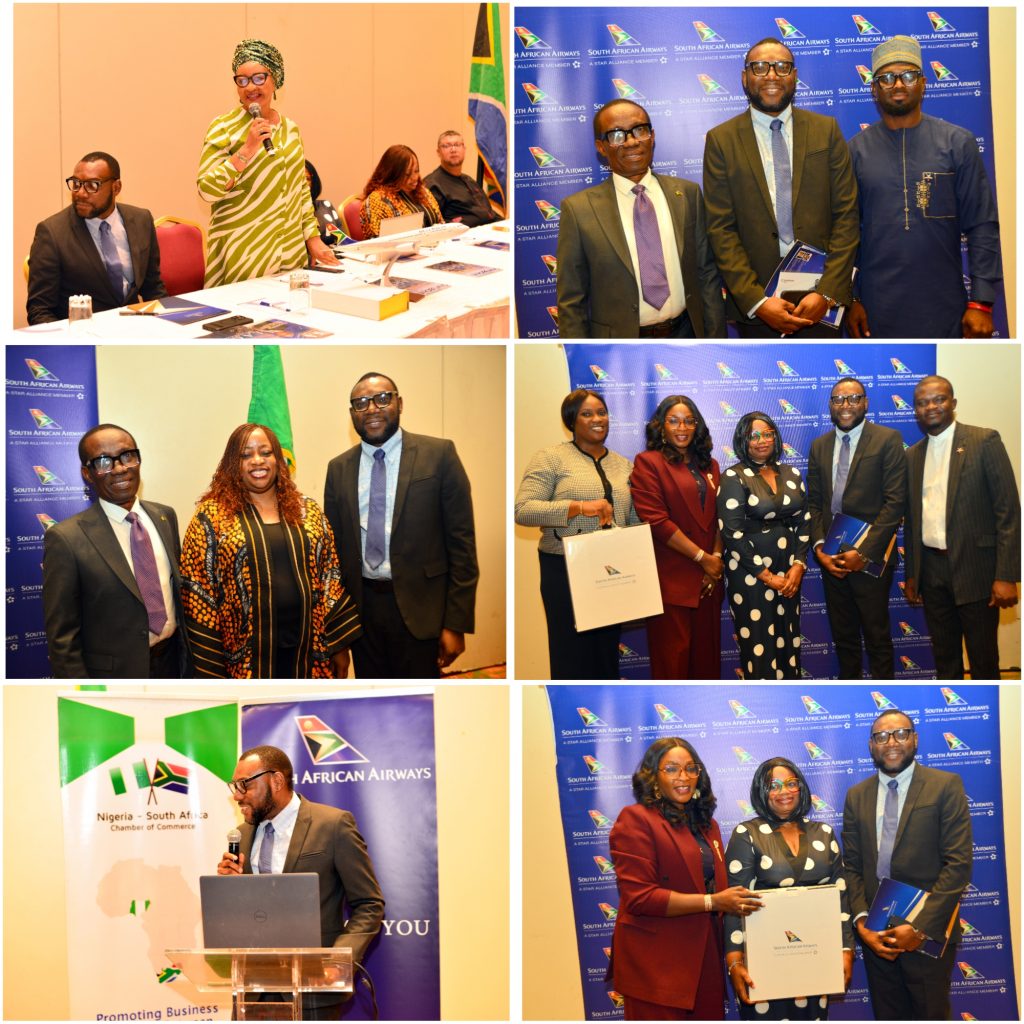
As Africa navigates its path through the fourth industrial revolution, the Nigeria-South Africa Chamber of Commerce (NSACC) has brought together top business leaders, technologists, and policymakers at its July 2025 Breakfast Meeting in Lagos to address one of the continent’s most urgent conversations: Artificial Intelligence (AI) and the Future of Work.
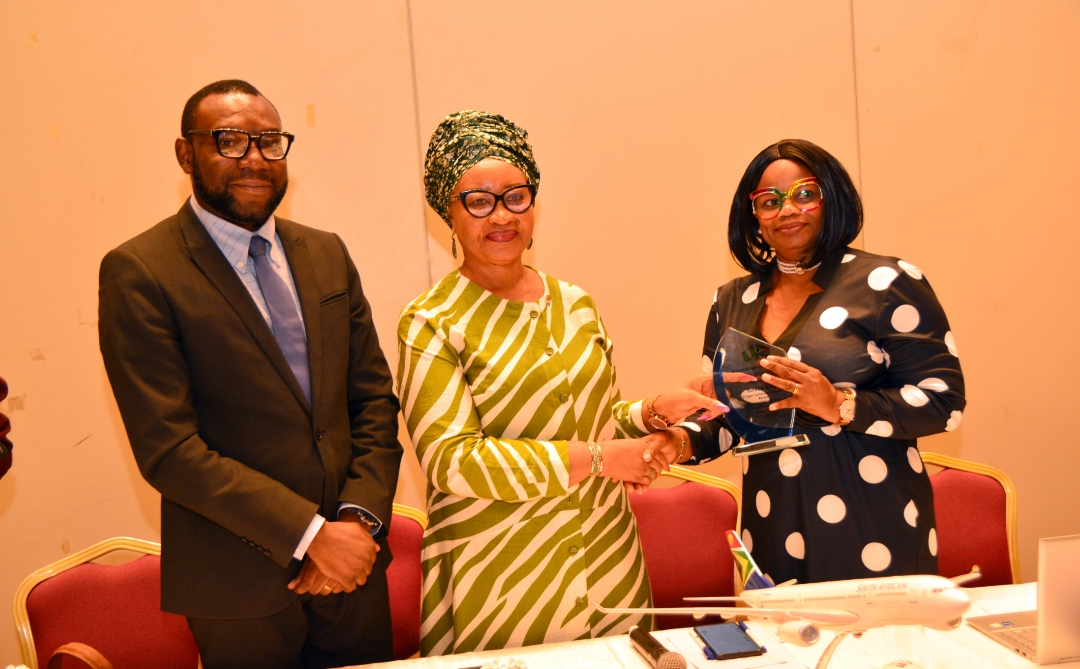
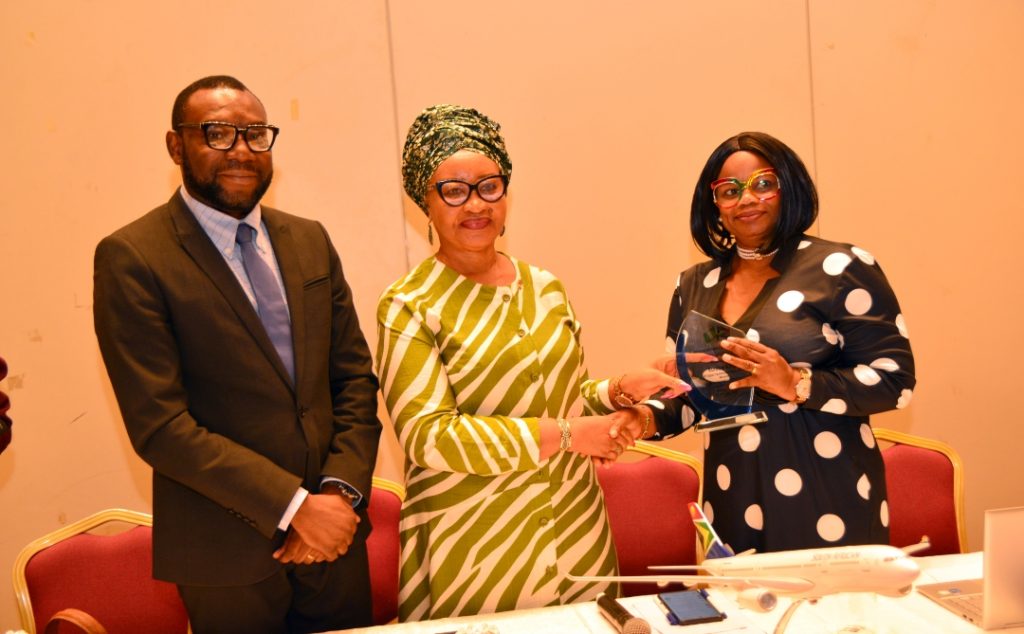
With the powerful theme anchored around opportunity rather than fear, the event was sponsored by South African Airways.
In his opening remarks, Dr. Ije Jidenma, Chairperson of NSACC, acknowledged the fears surrounding AI while encouraging attendees to focus on the opportunities it brings for transformation. “The future of work is not something to fear. It is something we can shape together.”
She spoke candidly about Africa’s unique paradox—on one hand, a youthful, growing population and vibrant tech ecosystem; on the other, staggering unemployment and a widening skills gap.
Dr. Jidenma emphasized that “AI will not replace people, but people who use AI will replace those who don’t.”
She called on the governments at all levels to provide an enabling policy framework and enabling environments that balance innovation with data privacy and inclusive growth.
He notes: *Businesses to invest not only in automation but in people and systems that promote AI literacy and human augmentation.
* Educators and institutions to reimagine curricula and train students for jobs that may not yet exist.
Guest speaker Eunice King, Vice President, Digital Transformation and Innovation at Arravo, delivered an insightful and data-backed presentation that served as both a warning and a blueprint for action.
Her keynote titled “AI and the Future of Work” broke down the ongoing disruption across sectors and job categories, highlighting:
🔻 Job Displacement Is Real
Roles like
Retail cashiers (especially in developed markets)
Entry-level customer support agents
Basic proofreaders and editors
…are rapidly being automated through AI-driven tools, bots, and platforms.
🔺 But New Roles Are Emerging
In their place, new positions are springing up:
AI Trainers & Data Annotators
Automation Workflow Designers
AI Application Developers & Integrators
Ethical AI Analysts
“If it can be automated, it probably will be,” King emphasized. “But it’s not the automation that’s dangerous—it’s the lack of adaptation.”
She warned that a mismatch between available skills and new tech realities could deepen inequality unless African nations take strategic steps.
Using insights from the World Economic Forum’s 2024 Trends Report, King presented a powerful graphic outlining the relationship between skill levels and AI replaceability.
High-skill, low-replaceability roles: AI researchers, senior architects, neurosurgeons
Moderate-skill, moderate-risk roles: Financial analysts, software developers, paralegals
Low-skill, high-risk roles: Data entry clerks, telemarketers, basic cashiers
The verdict was clear: adaptability is the new job security.
To bridge the gap between current competencies and future demands, King advocated a strong reskilling and upskilling culture, with four core strategies:
1. Identify skill gaps
2. Enroll in courses and workshops.
3. Build mentorship and networking circles.
4. Adopt a lifelong learning mindset.
She highlighted examples of AI applications in African sectors:
Healthcare: Kangpe AI (Nigeria), AI diagnostics in South Africa
Agriculture: Hello Tractor, smart irrigation
Finance: Flutterwave (fraud detection), FNB (customer profiling)
Education: AI tutors and personalized learning systems
“AI is here to enhance—not erase—human potential,” King concluded. “Let’s use it to free up our time for creativity, innovation, and impact.”
Adding a dramatic and humorous edge, Ohis Ehimiaghe, Regional GM, Africa, Middle East, and India Ocean Islands of South African Airways, illustrated the power of AI through a fictionalized—but all too real—story of two business professionals faced with urgent international travel.
One man, bogged down by manual processes and paperwork, missed a critical deadline.
The other, empowered by AI-driven visa applications, automated document processing, and facial recognition at airports, managed to board an international flight in under 72 hours—with no human interaction.
“From his home to sitting in business class—zero human interaction. That’s not fiction. That’s reality,” he said to a stunned and amused audience.
The lesson? Technology levels the playing field—only for those who embrace it.
In his closing remarks, Dr. Jidenma reiterated that Africa cannot afford to sit on the sidelines of the AI revolution. She proposed key action points for the Chamber and its stakeholders:
Cross-border AI collaborations between Nigeria and South Africa
Industry hackathons hosted by companies like Google and Arravo
Creation of an AI Policy Task Force to guide ethical and responsible AI adoption in Africa
“Let today’s discussion inspire not just ideas, but action,” she charged. “Let’s commit to building a future where AI serves humanity—and where Africa leads.”
GATMASH NEWS
…News that drives impact.
Contact:
[email protected]
Tel: +234(0)8072022024