
By: Theresa Moses
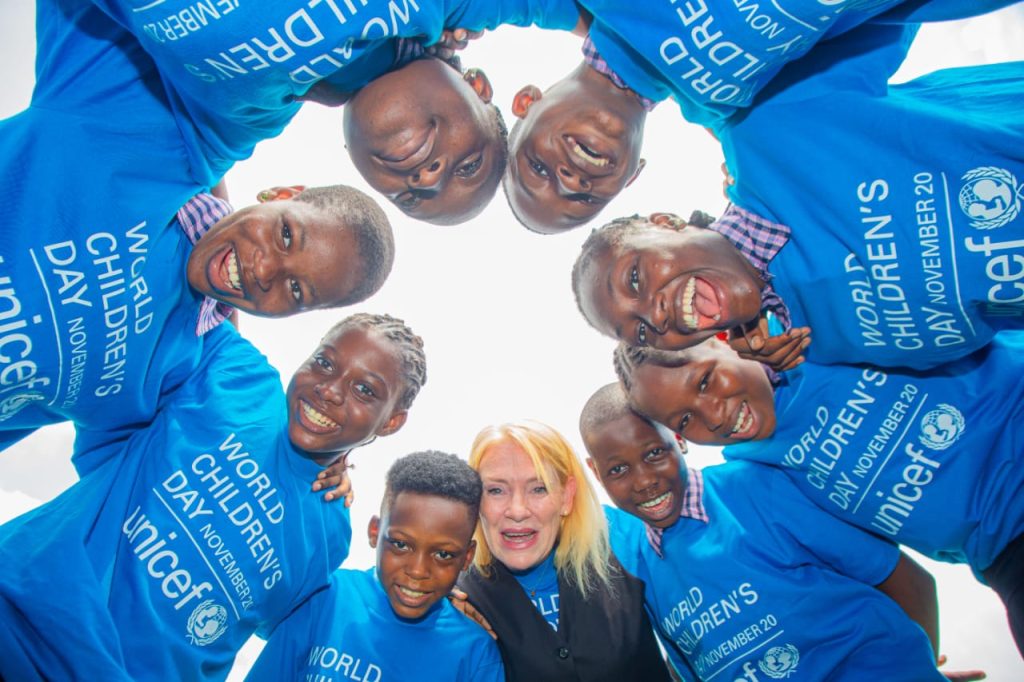
Nigeria’s worsening child-protection crisis took centre stage on World Children’s Day as journalists, diplomats, policymakers, and child advocates gathered for a high-level symposium convened by UNICEF in collaboration with the Nigerian Guild of Editors (NGE) and DAME in Lagos focused on the theme: “Equipping the Nigerian Child for the Future: How Prepared Are We?”
Speakers at the event issued urgent calls for coordinated action to safeguard the rights, well-being, and future of Nigerian children, emphasizing that progress has been made but much more remains to be done.
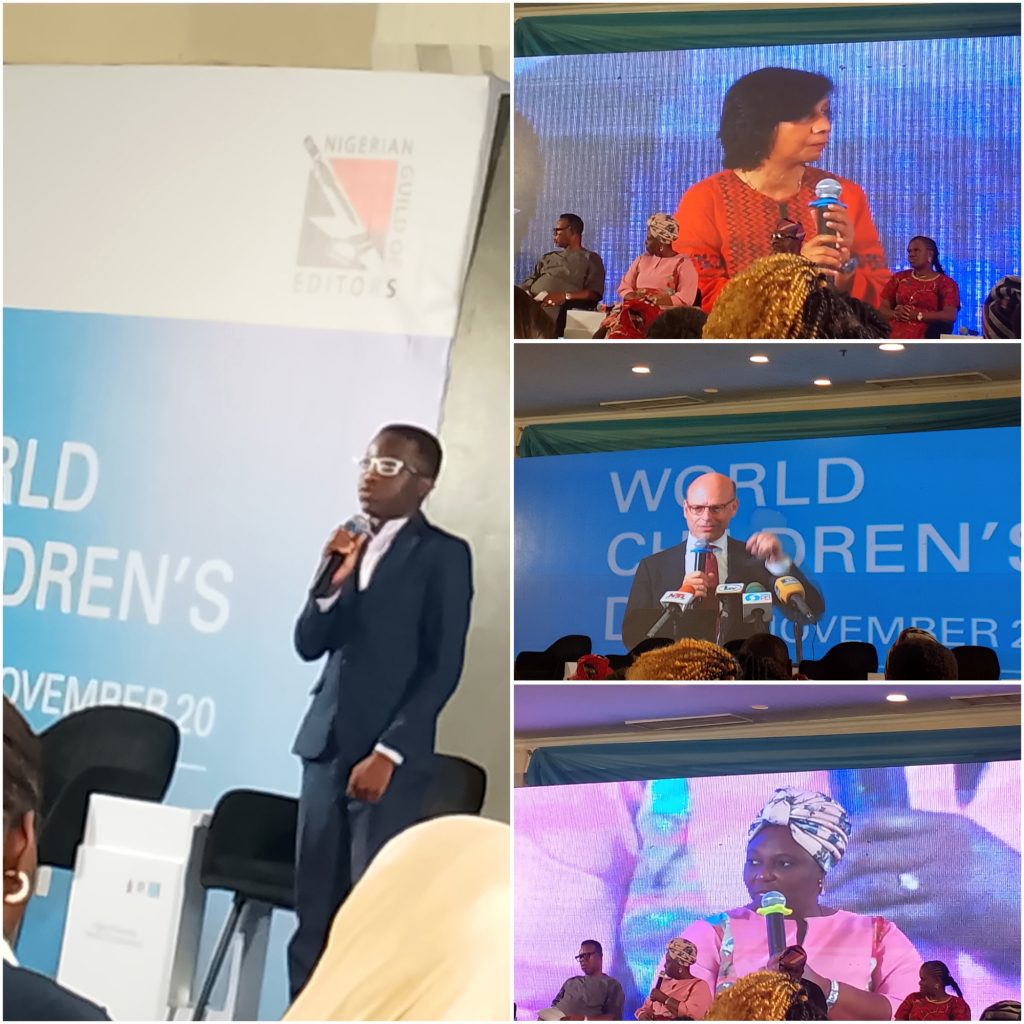
In his opening remarks, Mr. Eze Anaba, President of the Nigerian Guild of Editors (NGE), described the situation confronting Nigerian children as a “state of emergency.” He warned that, outside of the civil war era, no time in the country’s history has seen children face such uncertainty and insecurity. Recent government declarations of the highest level of security alert underscore the gravity of the situation.

“Across Nigeria, children are being killed, abducted, displaced, or traumatized. Schools, which should be safe havens for learning and growth, have increasingly become theatres of violence,” Mr. Anaba said.
Highlighting the scale of the crisis, he noted that Nigeria, with a population exceeding 220 million people—half of whom are children—faces a disproportionately high rate of children out of school, the highest in the world. Girls are particularly affected due to poverty, conflict, cultural norms, and lack of infrastructure. Millions of children under the age of one remain unvaccinated, and many continue to suffer from abuse, child labor, early marriage, and forced recruitment into conflicts.
Mr. Anaba emphasized that the media has a constitutional obligation to be more than passive observers. Journalists must amplify the voices of the voiceless, use accurate data in evidence-based reporting, celebrate successes in child-focused initiatives, and engage in solution-oriented investigative journalism that informs policymakers and the public.
Civil society organizations, he added, serve as vital links between affected communities and national stakeholders, providing protection services, generating grassroots solutions, and holding institutions accountable. The media should collaborate with civil society to ensure that these interventions inform national policy and advocacy efforts.
According to Mr. Anaba, the government bears the ultimate responsibility for protecting children. Authorities must implement and enforce laws securing children’s rights, invest robustly in education, healthcare, and social protection, secure schools and communities, and foster transparent collaboration with media and civil society. He stressed that without strong political will, advocacy efforts will remain incomplete.
Wafaa Saeed Abdelatef, UNICEF Nigeria Country Representative, in her remark presented key findings from a joint UNICEF-McDonald’s report, which combined statistical data and personal stories to illustrate the experiences of Nigerian children.
While Nigeria has made progress over the past three decades—including reduced child mortality rates and increased vaccination coverage from 13% to 40%—significant gaps remain. Over two million children are still unvaccinated, millions suffer from severe acute malnutrition, and foundational literacy and numeracy remain inadequate for many children, particularly by age ten.
Abdelatef highlighted that quality education, not just access, is critical. She pointed out that children who cannot read, comprehend, or perform basic mathematics by age ten are at a severe disadvantage, affecting their future employability, economic productivity, and societal contribution.
On child protection, she emphasized the continued threats posed by abductions, recruitment of children in conflict areas, and other grave violations. She reiterated that schools must remain safe spaces for learning and that communities must have confidence in the safety and accessibility of educational institutions.
The UNICEF representative also drew attention to health and nutrition concerns, including severe acute malnutrition, which increases a child’s risk of death by ten to twelve times compared to well-nourished peers. She praised community-driven interventions and local production of therapeutic nutrition products as effective strategies to address malnutrition while creating local jobs.
Routine immunization and primary healthcare workers, Abdelatef stressed, are critical in saving children’s lives. She called for investment in human resources, proper training, and consistent support for community health workers, nurses, and doctors delivering essential services.
Sanitation and hygiene remain key challenges, with an estimated 48 million Nigerians practicing open defecation. She commended states like Katsina and Jigawa for achieving open-defecation-free status through local innovation, highlighting that similar approaches could be scaled nationwide.
The Consul General of the Kingdom of the Netherlands in Lagos, Michel Deelen, praised the children present and underscored why global partners like the UN and UNICEF prioritize child welfare.
He acknowledged Nigeria’s current challenges but insisted that children must remain at the heart of national planning.
His message was clear: “We hear that Nigeria’s macroeconomic indicators are improving. Fine. But as long as schools are not running as they should, nothing is going better.”
He condemned the existence of schools without roofs, water, or teachers, calling it “a disgrace.”
The diplomat reiterated the Netherlands’ support for UNICEF projects in:
Water, sanitation and hygiene (WASH) programs
Generation Unlimited, a global initiative supporting young innovators and entrepreneurs
He urged government authorities to restore normalcy and rebuild the education system.
One of the most powerful voices of the day came from teenage child-rights advocate Tinafi Akawo, visually impaired Nigerian singer-songwriter and tech enthusiast who spoke passionately about technology, digital inclusion, and child protection.
He proposed futuristic solutions, including:
1. AI-driven school security systems
Systems capable of:
Detecting threats
Identifying anomalies
Alerting authorities before kidnapping attempts occur
Tinafi said this could significantly reduce school abductions.
2. Digital inclusion for underserved children
He called out limited internet access for millions of Nigerian children and urged government-led inclusion policies.
3. Mentorship and funding for child innovators
He shared an example of an app idea for visually impaired navigation using AI, explaining that thousands of children have similar solutions that never get support.
His message to the media: “The media can showcase child innovators, push government to act, and give us a voice.”
He concluded with a moving rendition of “Unstoppable” by Cobhams Asuquo, earning thunderous applause.
GATMASH NEWS
…News That Drives Impact
For advert placements and business inquiries, kindly reach us via:
📧 Email: [email protected]
📞 Tel/WhatsApp: +234 (0) 807 202 2024
We value your voice! Share your stories, eyewitness reports, and contributions with us anytime:
📲 SMS/WhatsApp: +234 (0) 807 202 2024
📧 Email: [email protected]
Visit us online: https://www.gatmash.com