

As technology reshapes how Nigerians work, create, communicate and raise their children, stakeholders are coming together to ask a critical question: How do we build a digital society that is innovative, inclusive and safe?
By Theresa Moses
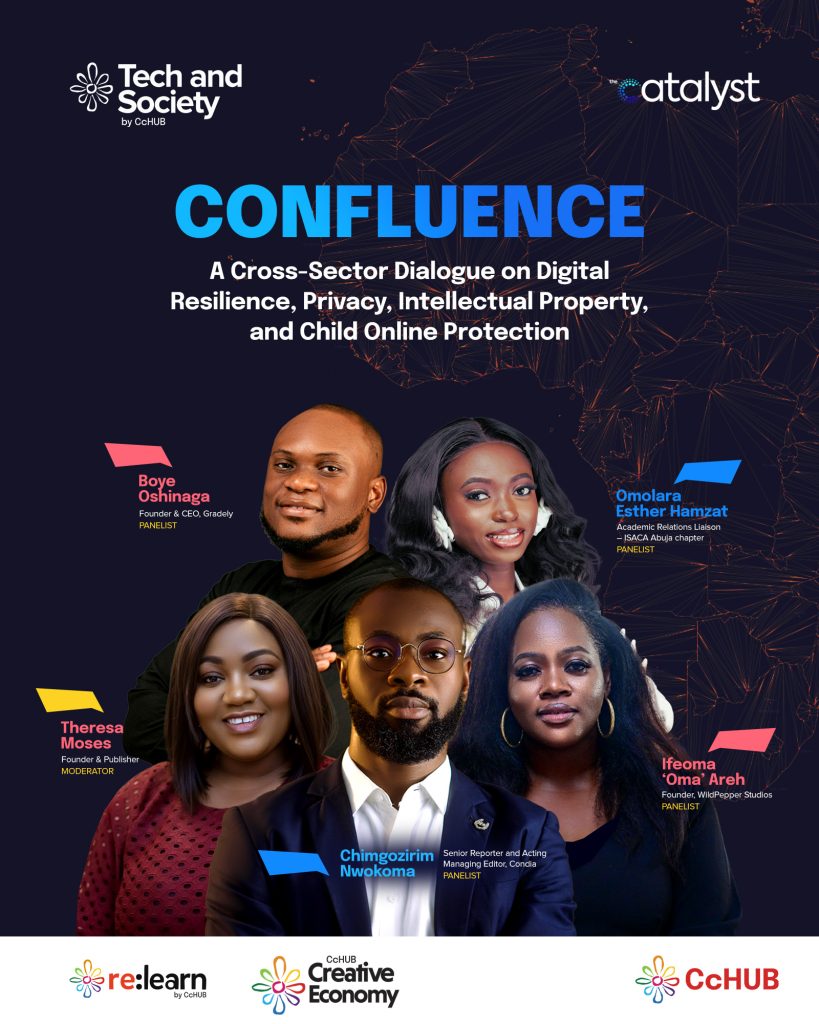
Technology has changed the way we work, communicate, learn, create, do business and participate in society. But with every opportunity the digital world creates, new questions are emerging. How do we protect ourselves from online threats without shutting down the openness that makes the internet useful? How do we protect personal information in a world where almost everything is becoming digital? How do creators and innovators protect their intellectual property when content can be copied, altered and redistributed within seconds? And perhaps most importantly, how do we ensure that children can enjoy the benefits of technology without being exposed to dangers they may not yet understand?
These are no longer questions for technology experts alone. They concern parents, teachers, journalists, entrepreneurs, policymakers, civil society organisations, businesses, creators, young people and virtually every Nigerian who uses a smartphone. This is the thinking behind Confluence: A Cross-Sector Dialogue on Digital Resilience, Privacy, Intellectual Property and Child Online Protection, an upcoming conversation designed to bring different sectors into the same room to examine some of the most pressing challenges shaping our digital lives.

The event will take place on Tuesday, August 18, 2026, from 11:00 a.m. to 1:00 p.m. in Montgomery Yaba, Lagos. And registration is compulsory.
Registration link https://luma.com/e60g1pp3
And perhaps what makes Confluence particularly important is its approach. This is not designed to be another event where experts speak from a stage while everyone else listens, takes photographs and leaves. It is intended to be a conversation. A conversation that asks: What can each of us actually do differently?
FROM DIGITAL CONVENIENCE TO DIGITAL RESPONSIBILITY
For many Nigerians, digital technology has become almost inseparable from everyday life. We bank online. We work remotely. Children learn through digital platforms. Businesses advertise on social media. Journalists gather information online. Creators build careers through digital content. Civil society organisations mobilise communities through technology. But digital participation without digital resilience can leave individuals and organisations vulnerable.
A compromised WhatsApp account can put a small business owner’s customers at risk. A stolen social media account can wipe out years of work for a creator. A careless disclosure of personal information can expose someone to fraud, harassment or identity theft. And a child navigating the internet without adequate guidance can encounter risks that they may not have the maturity to recognise.
The solution, therefore, cannot simply be to tell people to “be careful online.” People need knowledge, systems, policies and practical tools. That is where conversations like Confluence become valuable.
WHY PRIVACY SHOULD MATTER TO EVERYONE
Privacy is sometimes treated as a technical or legal issue. It is much more personal than that. Our names, photographs, locations, financial information, conversations, online activities and personal preferences can all become digital data. The question is not whether we use technology. We already do. The question is whether we understand what happens to our information once we put it into digital systems. Confluence provides an opportunity for participants to move beyond the usual warnings and examine practical approaches to protecting personal and organisational information.
CREATORS ALSO NEED PROTECTION
Nigeria’s creative and technology ecosystems are producing increasingly innovative work. From filmmakers and photographers to writers, designers, musicians, developers and digital creators, intellectual property has become an important part of the digital economy. But the same technology that allows a creator to reach thousands of people can also make it easier for someone else to copy their work. How do creators protect their ideas? What happens when original content is reproduced without permission? How can emerging creators understand their rights without becoming overwhelmed by legal and technical language? These are practical questions that deserve practical answers.
AND THEN THERE ARE OUR CHILDREN
Perhaps no part of the conversation is more urgent than child online protection. Today’s children are growing up in a digital environment that many of their parents did not experience as children. They are learning, playing, communicating, creating and expressing themselves online. Technology can open doors to education, creativity and opportunity. But without the right safeguards, it can also expose children to harmful content, cyberbullying, manipulation, exploitation and other online risks. The responsibility cannot be placed entirely on parents. Schools, technology companies, policymakers, educators, civil society organisations and communities all have roles to play. Child online safety must become a shared responsibility.
WHY THE PANEL MATTERS
The strength of Confluence is also reflected in the diversity of perspectives coming to the table. The panel brings together expertise spanning technology, entrepreneurship, cybersecurity, online safety, media, creative industries and digital innovation.
Among the speakers is Boye Oshinaga, a two-time founder whose entrepreneurial journey spans fintech and edtech. He founded Riby Finance and later co-founded Gradely, an education technology company using AI to personalise learning and improve educational outcomes.
Also joining the conversation is Ifeoma “Oma” Areh, a Pan-African creative strategist, filmmaker, brand strategist, communications architect and media innovator with extensive experience shaping Africa’s digital creator economy.
Omolara Esther Hamzat, an online safety advocate, cybersecurity professional and digital trust educator, brings experience in digital resilience and child online protection, while Chimgozirim Nwokoma, a senior technology and startup journalist, brings a media perspective shaped by years of reporting on Africa’s technology, fintech and venture capital ecosystem.
The diversity is deliberate. Digital problems rarely stay within one professional boundary. A cybersecurity problem can become a business problem. A privacy failure can become a reputational crisis. Intellectual property theft can affect a creator’s livelihood. Poor digital literacy can expose a child to serious risks.That means solutions must also cross boundaries.
THE CONVERSATION SHOULD NOT END ON THE STAGE
One of the most interesting elements of Confluence is the facilitated table dialogue. Participants will not simply listen to panelists. They will have the opportunity to sit in smaller groups, share experiences, examine specific challenges and identify practical actions.
This is where the event can move from conversation to solution.
Because sometimes the person with the most useful answer is not the person holding the microphone. It could be a teacher who has dealt with a difficult online safety situation. A journalist who has experienced content theft. A founder who has struggled with cybersecurity. A parent trying to protect a child online. A creator whose work was reproduced without permission. Or a young person who understands the digital environment in ways older generations may not. Bringing these experiences together is the essence of Confluence.
WHAT SHOULD PARTICIPANTS TAKE HOME?
The most valuable outcome should not simply be another event photograph or certificate. Participants should leave with a better understanding of: How to strengthen digital resilience in their personal or professional environments. Practical approaches to privacy and data protection. How intellectual property challenges affect digital creators and businesses. The responsibilities of different sectors in protecting children online. Where collaboration can produce better digital safety outcomes. Specific actions they can take within their organisations, families and communities. The Technology and Society Practice is focused on strengthening digital and civic resilience across Africa through research, training, stakeholder engagement and strategic interventions. Its SafeOnline Africa initiative also provides cybersecurity policy resources and guidelines to help organisations strengthen their digital resilience.This makes Confluence more than a one-day conversation. It is part of a broader effort to ensure that Africa’s digital transformation is not only innovative, but also safe, inclusive and responsible.
WHY YOU SHOULD ATTEND
If you are a journalist, creator, entrepreneur, technology professional, parent, educator, policymaker, civil society practitioner, business owner or young digital user, this conversation concerns you. You do not need to be a cybersecurity expert. You do not need to understand every technical term. You simply need to recognise that technology is now part of almost every aspect of our lives; and that building a safer digital society requires all of us.
For me, as a media professional and someone deeply involved in digital journalism and public advocacy, I see Confluence as an opportunity to ask the questions that matter beyond the headlines: How do we build a digital society that is innovative without being reckless, open without being unsafe, and connected without compromising people’s rights? Those questions deserve more than one sector’s answer. They require all of us. And that is why Confluence matters.
Come with your experience. Come with your questions.
Come ready to listen; and, more importantly, come ready to contribute to solutions. Because a safer digital future will not happen by accident, we have to build it together.
GATMASH NEWS
…News That Drives Impact
For advert placements and business inquiries, kindly reach us via:
📧 Email: [email protected]
📞 Tel/WhatsApp: +234 (0) 807 202 2024
We value your voice! Share your stories, eyewitness reports, and contributions with us anytime:
📲 SMS/WhatsApp: +234 (0) 807 202 2024
📧 Email: [email protected]
Visit us online: https://gatmash.com