

By Theresa Moses
Jigawa ranked first among the states assessed in the 2026 Phillips Consulting State Performance Index (PSPI), followed by Abia, Enugu, Gombe and Lagos, as a new assessment of subnational governance highlighted disparities in revenue generation, public service delivery and citizens’ satisfaction.
Abia recorded the biggest improvement, climbing 34 places, while Enugu rose 27 places and Delta moved up 18 places.
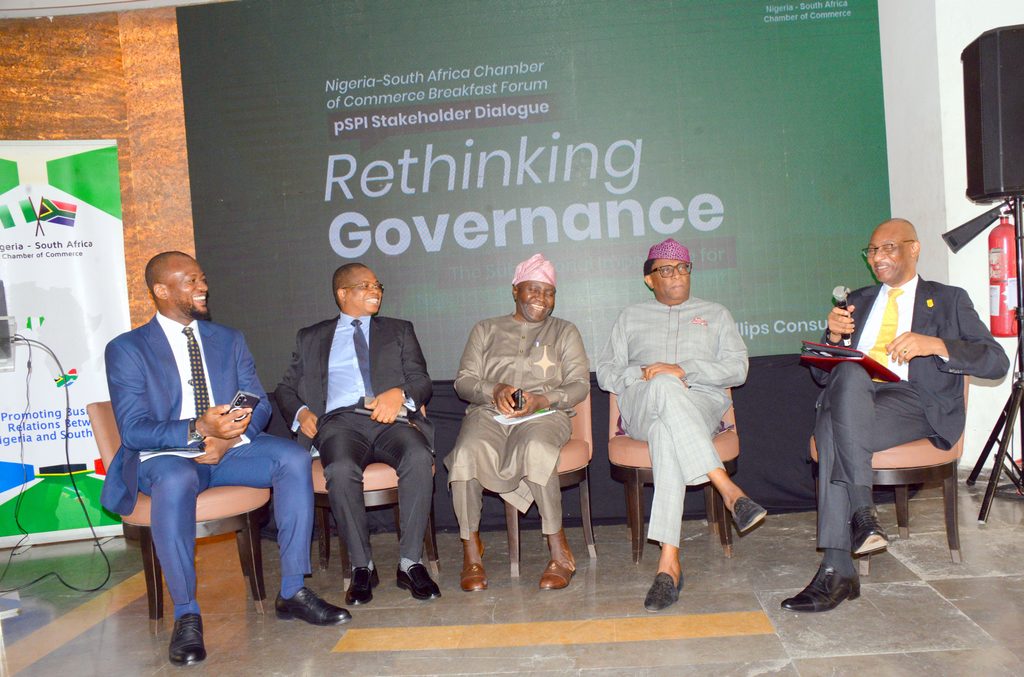
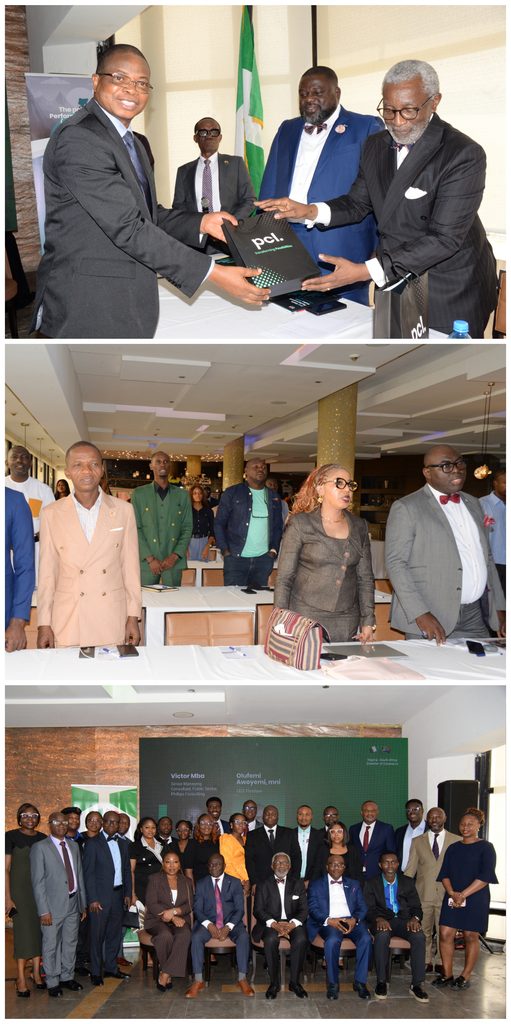
The findings were presented at the Nigeria-South Africa Chamber of Commerce (NSACC) Breakfast Forum in Lagos, where business leaders and policy experts examined the role of state and local governments in driving Nigeria’s sustainable development.

The forum, sponsored by Phillips Consulting Limited, was held on Thursday, 29 October, 2026 at Sky Restaurant, Eko Hotel & Suites, Victoria Island, under the theme, “Rethinking Governance: The Subnational Imperative for Nigeria’s Sustainable Development.”
Presenting the index, Mr. Victor MBA, Senior Managing Consultant, Public Sector, Phillips Consulting Limited, said the assessment combined citizens’ experiences with financial performance indicators to provide a broader picture of governance across the states.
The 2026 assessment drew on approximately 38,312 respondents and audited state financial records. Its methodology assigned 70 per cent to objective financial data and 30 per cent to citizens’ feedback.
The indicators included citizen satisfaction, internally generated revenue relative to federal allocations, debt sustainability, revenue growth and the timely publication of audited financial statements.
Jigawa led the ranking, with Abia in second place, followed by Enugu, Gombe and Lagos. Ekiti, Kano, Akwa Ibom, Borno and Kwara completed the top ten.
Beyond Abia’s 34-place rise, Enugu climbed 27 places, Delta 18, Niger and Nasarawa 16 places each, Plateau 14, Borno 13 and Adamawa 11. Cross River and Imo improved by eight places each.
The index highlighted significant differences in states’ capacity to finance their activities through internally generated revenue.
Eighteen of the 33 states assessed reportedly generated less than 30 per cent of their federal receipts through their own revenue sources.
Lagos recorded internally generated revenue equivalent to 672 per cent of its federal allocation and accounted for approximately 39 per cent of Nigeria’s total internally generated revenue.
Enugu also recorded internally generated revenue exceeding its allocation from the Federation Account.
However, stronger revenue figures did not necessarily translate into higher citizen satisfaction.
The average satisfaction score was 3.01, with employment, security, law enforcement conduct, business support and access to clean water identified as areas requiring attention. Although education was considered relatively affordable in some areas, concerns remained about the quality of learning.
Some states were excluded from the assessment because of gaps in audited financial records or insufficient survey responses.
During the panel discussion, Mr. Adetilewa Adebajo, Chief Executive Officer of CFG Advisory and former Senior Technical Adviser to the Minister of Industry, Trade and Investment, said state governments were critical to the success of Nigeria’s investment ambitions.
He explained that although the Federal Government develops national policies, states control several conditions that determine whether investments materialise, including land access, local infrastructure, approvals and the consistency of government commitments.
Adebajo cited the Lekki Deep Sea Port and the Dangote Refinery’s earlier consideration of the Olokola area in Ogun State before its eventual relocation to Lagos as examples of how government coordination and political decisions can influence major investments.
He said investors require stable policies, reliable institutions and an enabling business environment, warning that attracting capital would mean little if projects could not be sustained.
He also identified opportunities in emerging sectors, including lithium and rare-earth minerals, stressing the need for Nigeria to improve its capacity to attract and retain investment.
Dr Muda Yusuf, Chief Executive Officer of the Centre for the Promotion of Private Enterprise (CPPE), questioned whether Nigeria’s revenue-sharing arrangements adequately compensate states that host major industries.
He argued that states such as Ogun bear substantial infrastructure, environmental and social costs associated with manufacturing, while significant portions of the revenue generated by businesses flow into the central pool.
Although states benefit from employment-related taxes such as Pay-As-You-Earn (PAYE), Yusuf said the current arrangement gives them limited direct fiscal incentives to attract and support large businesses.
He called for a more equitable fiscal framework that recognises the economic contributions and responsibilities of host states.
Yusuf also maintained that publishing audited accounts was not enough to establish accountability. Governments, he said, must demonstrate that public expenditure delivers value and addresses citizens’ priorities.
He questioned spending on airports, airlines, flyovers and large government secretariats when many communities still lack basic roads, potable water, functional schools and healthcare facilities.
He further emphasised the importance of local governments, arguing that their proximity to communities makes them essential to effective service delivery.
Professor Dauda Olalekan Yinusa, Executive Director, Policy, Strategy and Research, Nigeria Governors’ Forum (NGF) Secretariat, said economic growth should not be mistaken for development, noting that the impact of government policies often takes time to become visible.
He described the NGF, established in 1999, as a non-partisan platform for policy coordination, peer learning and the exchange of governance practices among state governments.
Citing initiatives in Jigawa and Enugu, he highlighted efforts in healthcare, skills development and revenue generation, while cautioning against judging states solely by their positions on a performance table without considering their different circumstances.
Yinusa disclosed that the NGF was working on research comparing citizens’ priorities with government actions, with preliminary findings indicating areas of misalignment.
He advocated outcome-based budgeting, stressing that public expenditure should be assessed by its impact rather than the number of projects completed.
He illustrated this with the challenge of out-of-school children, explaining that addressing the problem requires more than building classrooms. Access to nutrition, water, electricity, early childhood development and family support must also be considered.
The NGF, he added, was documenting governance practices in states including Enugu, Jigawa and Kaduna to encourage the adoption of approaches that have produced positive results.
In his welcome address, Mr. Ajibola Olomola, Vice Chairman of the Nigeria-South Africa Chamber of Commerce, said state and local governments have a direct influence on citizens’ daily lives and the business environment.
He recalled the 2017 partnership between Lagos State and South Africa’s Gauteng Province, which focused on trade, industrialisation, manufacturing, governance and capacity building.
Olomola said stronger cooperation between subnational governments could support economic development through knowledge exchange and shared opportunities.
The panel also featured Olufemi Awoyemi, MNI, Chief Executive Officer of Proshare.
The discussions underscored the importance of linking state revenue and public expenditure to measurable development outcomes.
For state governments, the challenge extends beyond increasing internally generated revenue. It includes creating an environment where businesses can operate sustainably and ensuring that public resources address the needs of residents.
The 2026 index provides a basis for examining those responsibilities, while the forum’s discussions placed investment coordination, fiscal incentives and outcome-based budgeting at the centre of the subnational development debate.
GATMASH NEWS
…News That Drives Impact
For advert placements and business inquiries, kindly reach us via:
📧 Email: [email protected]
📞 Tel/WhatsApp: +234 (0) 807 202 2024
We value your voice! Share your stories, eyewitness reports, and contributions with us anytime:
📲 SMS/WhatsApp: +234 (0) 807 202 2024
📧 Email: [email protected]
Visit us online: https://gatmash.com