

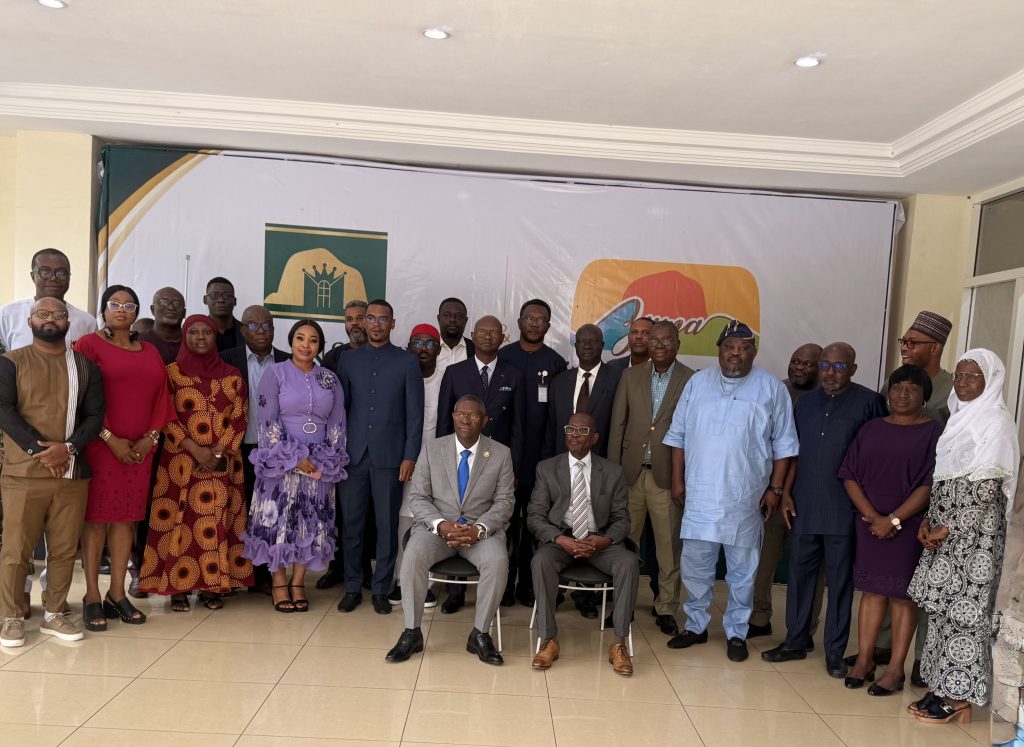
The Community Court of Justice, ECOWAS has commenced a four-day workshop on the operationalisation of its Strategic Plan 2026 – 2030 at Zuma Rock Resort in Niger State, Nigeria. The workshop brings together management, directors, heads of divisions and units, and some staff of the Court, as well as representatives of the ECOWAS Commission’ Strategic Planning Division and technical experts to develop the framework, tools, and accountability mechanisms necessary for the successful implementation of the Court’s new strategic roadmap.
Declaring the workshop open, Hon Justice Ricardo Cláudio Monteiro Gonçalves, President of the Court, described the operationalisation workshop as the beginning of a new chapter in the Court’s institutional development. He stressed that while the launch of the Strategic Plan marked a significant milestone, its true value would be determined by its implementation and its ability to transform the way the Court operates, serves Community citizens and other stakeholders.
“We need a new institutional mindset: from routine to performance, from processes to results, from silos to collaboration, and from reaction to strategy. This cultural transformation will be critical to the success of the Strategic Plan,” he stated. He called on staff members to embrace a culture of responsibility, performance, and collaboration.
He said that the plan provided a clear roadmap for strengthening judicial efficiency, expanding access to justice, enhancing transparency, modernising institutional systems, and reinforcing public trust in the Court. He highlighted the alignment of the Strategic Plan with the ECOWAS Vision 2050, noting that the Court plays a central role in advancing good governance, the rule of law and regional integration.

In his welcome remarks, Dr Yaouza Ouro-Sama, Chief Registrar of the Court and Chairman of the Strategic Plan Technical Committee, described the workshop as a significant milestone in strengthening the Court’s institutional effectiveness. He stressed that successful implementation of the plan would require shared ownership, clearly defined responsibilities, timelines, measurable performance indicators, robust monitoring systems, and sustained collaboration across all departments of the Court.
Presenting the objectives of the workshop, Mrs Margaret Azinkpali Acting Principal Officer, Planning, Monitoring and Evaluation explained that the four-day workshop is designed to transform the Strategic Plan from vision to implementation. She noted that the workshop would establish the institutional frameworks, implementation tools, accountability frameworks, and monitoring mechanisms required for effective execution.
According to her, key deliverables include the validation of the Strategic Execution Roadmap, confirmation of departmental ownership and accountability matrices, development of an institutional Key Performance Indicator (KPI) Register, and strengthening staff capacity in monitoring, evaluation, reporting, and performance management. She emphasised that its success will depend on clear ownership, measurable targets, and performance-driven implementation.
Providing an overview of the Strategic Plan 2026–2030, Mrs Azinkpali described the plan as a practical and living framework intended to guide the Court’s work, decision-making, resource allocation, and performance measurement over the next five years. She explained that the plan is supported by a Results-based Strategy Map and a Strategic Execution Roadmap anchored on five implementation imperatives: leadership and governance, performance culture, operational alignment, strategic project and portfolio management, and performance analysis, reporting, and learning.
Mr Mamadu Mudjataba Baldé, Head of Strategic Planning, Programming and Coordination at the ECOWAS Commission presented the ECOWAS Vision 2050 and the Community Strategic Framework (CSF). The presentation underscored Vision 2050 as the Community’s long-term blueprint for a fully integrated, peaceful, and prosperous West Africa founded on strong institutions, respect for fundamental rights, and sustainable development. Mr Baldé highlighted the strong alignment between the Court’s Strategic Plan and the broader ECOWAS strategic framework noting that the Court’s objectives directly support pillar two of Vision 2050 on Governance and Rule of Law, and contributes to Community outcomes relating to judicial effectiveness, accountability, legal harmonisation, and human rights protection.
During the workshop, participants will examine institutional reforms required to embed the Strategic Plan into the Court’s daily operations. Discussions will focus on strengthening governance structures, clarifying roles and responsibilities, improving communication and accountability mechanisms, aligning departmental objectives with strategic priorities, cultivating a high-performance culture, and integrating planning, budgeting, monitoring, and performance management systems.
The workshop holding from 8 – 11 June 2026 is expected to produce a validated Strategic Execution Roadmap, a clear accountability and ownership framework, an institutional KPI Register, and strengthened monitoring and evaluation mechanisms to support implementation. By translating strategic priorities into concrete actions, the Court aims to enhance judicial efficiency, improve access to justice, strengthen institutional performance, and contribute more effectively to the realisation of the ECOWAS Vision 2050.
The Strategic Plan 2026–2030 reflects the Court’s commitment to becoming a more efficient, transparent, innovative, and impactful regional judicial institution, while advancing the rule of law, human rights protection, and regional integration.
GATMASH NEWS
…News That Drives Impact
For advert placements and business inquiries, kindly reach us via:
📧 Email: [email protected]
📞 Tel/WhatsApp: +234 (0) 807 202 2024
We value your voice! Share your stories, eyewitness reports, and contributions with us anytime:
📲 SMS/WhatsApp: +234 (0) 807 202 2024
📧 Email: [email protected]
Visit us online: https://gatmash.com