


By Theresa Moses
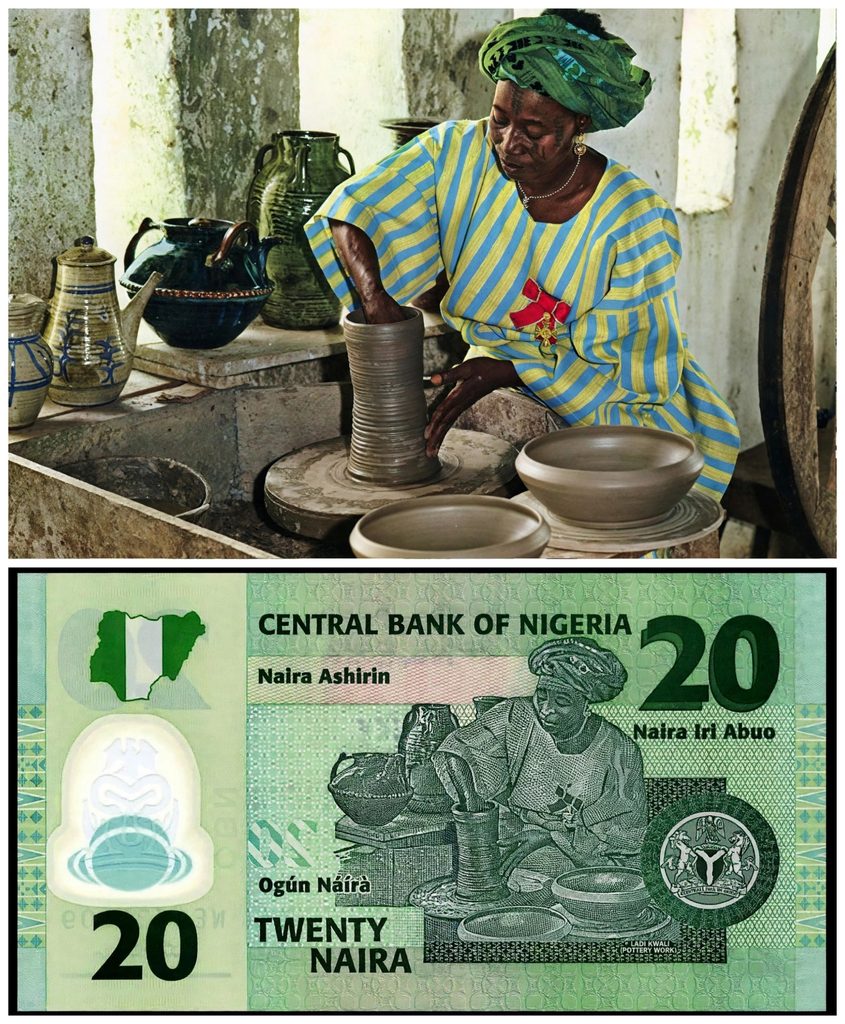
If you have ever held a Nigerian ₦20 note, you have probably seen her image. A woman bent over a traditional pot, absorbed in her craft.
Her name was Ladi Dosei Kwali; a Nigerian potter whose extraordinary journey took her from the traditional pottery culture of the Gbagyi people to international exhibitions, national honours and a lasting place in Nigeria’s history. Yet, for many years, millions of Nigerians carried her image without knowing the remarkable story behind it.
A Gift Discovered in Childhood

Ladi Kwali was born around 1925 in Kwali, in present-day Federal Capital Territory. Some historical accounts suggest she may have been born earlier, around 1920. She grew up in a Gbagyi community where pottery was traditionally practised by women. As a child, she learnt the craft from her aunt, using the traditional coiling method. Without a pottery wheel, she built vessels from coils of clay, shaping them from the inside with a wooden paddle.
Her work was both functional and artistic. She produced water jars, cooking pots, bowls and other vessels, decorating them with intricate patterns inspired by animals and nature, including lizards, snakes, scorpions, crocodiles, birds and fish. Her ability soon distinguished her from other potters. Family accounts recall that her pots were sometimes sold before they even reached the market.
The Encounter That Changed Her Story
In 1950, British potter Michael Cardew encountered some of Kwali’s work in the collection of the Emir of Abuja, Alhaji Suleiman Barau. Impressed by her craftsmanship, Cardew later established a pottery training centre in Abuja; the name then used for present-day Suleja: under the colonial government’s Department of Commerce and Industry.
In 1954, Kwali joined the centre as its first female potter. There, she encountered techniques that were very different from the traditional methods she had mastered as a child. She learnt wheel throwing, glazing, kiln firing and other studio pottery techniques. But rather than abandon her heritage, Kwali combined the new methods with the traditional designs and techniques of her Gbagyi background.That fusion became the hallmark of her work.
From Traditional Craft to International Art
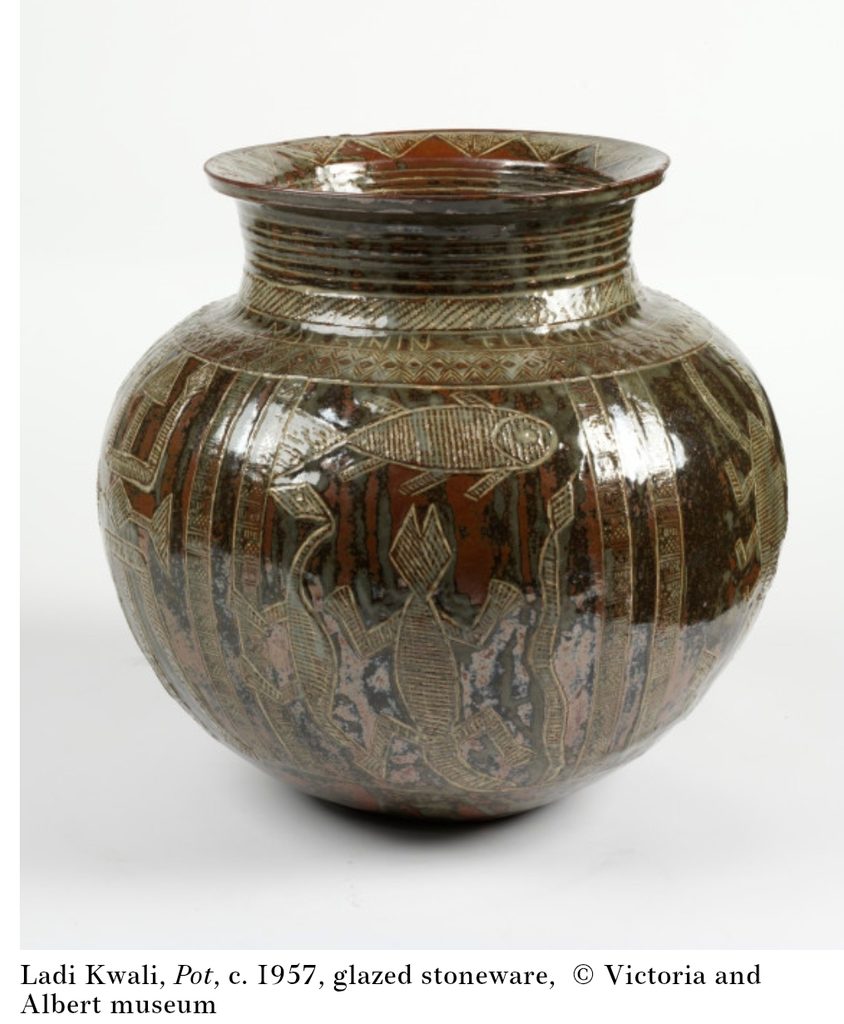
Kwali’s pottery soon attracted attention beyond Nigeria. Her works were featured in international exhibitions in the late 1950s and 1960s, including exhibitions in Britain and Europe. She also travelled abroad to demonstrate her techniques. In 1972, she toured the United States with Cardew. Her work challenged the idea that indigenous pottery was merely a household craft. Through its distinctive forms, intricate decoration and technical refinement, her ceramics gained recognition as works of art.
She was not simply preserving an old tradition. She was transforming it while keeping its cultural identity intact.
Recognition and National Honours
The recognition that followed was extraordinary. In 1963, Kwali was awarded an MBE (Member of the Order of the British Empire). In 1977, Ahmadu Bello University awarded her an honorary doctorate.
The honour was particularly remarkable because Kwali had never received formal schooling. In 1980, she became a recipient of the Nigerian National Order of Merit (NNOM), one of Nigeria’s highest honours for academic and intellectual achievement. In 1981, she was appointed an Officer of the Order of the Niger (OON). The pottery centre where she had worked was also renamed the Ladi Kwali Pottery Centre in recognition of her contribution.
The Face Millions Carried
Kwali died on 12 August 1984, but her legacy continued to grow. Her portrait eventually appeared on Nigeria’s ₦20 banknote, making her face familiar to millions of Nigerians.
For many people, however, the woman on the note remained nameless. Behind that image was a pioneer whose work had travelled far beyond the community where she first learnt to shape clay.
Her ceramics entered collections around the world, including the Smithsonian National Museum of African Art and the Victoria and Albert Museum. Her influence has also continued through exhibitions examining the contribution of Black women to ceramics and contemporary art.
A Legacy Cast in Clay
Ladi Kwali’s story reminds us that greatness does not always begin in classrooms, palaces or places of privilege. Sometimes, it begins with a simple skill passed from one generation to another and the courage to take it beyond its familiar boundaries.
Every time her face appears on the ₦20 note, it is more than currency; it is a reminder of a woman whose hands helped shape a piece of Nigeria’s history.
GATMASH NEWS
…News That Drives Impact
For advert placements and business inquiries, kindly reach us via:
📧 Email: [email protected]
📞 Tel/WhatsApp: +234 (0) 807 202 2024
We value your voice! Share your stories, eyewitness reports, and contributions with us anytime:
📲 SMS/ WhatsApp: +234 (0) 807 202 2024
📧 Email: [email protected]
Visit us online: https://gatmash.com