
By: Theresa Moses
….MTN, Governments, and Private Sector Leaders Call for Shift from Dialogue to Action
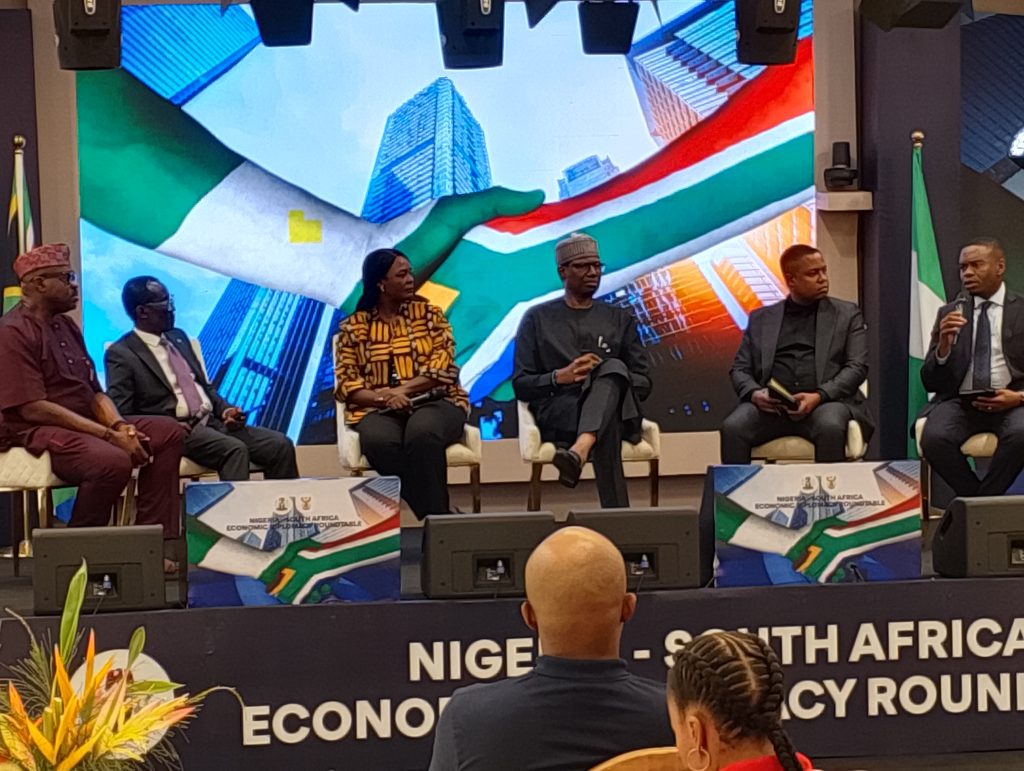
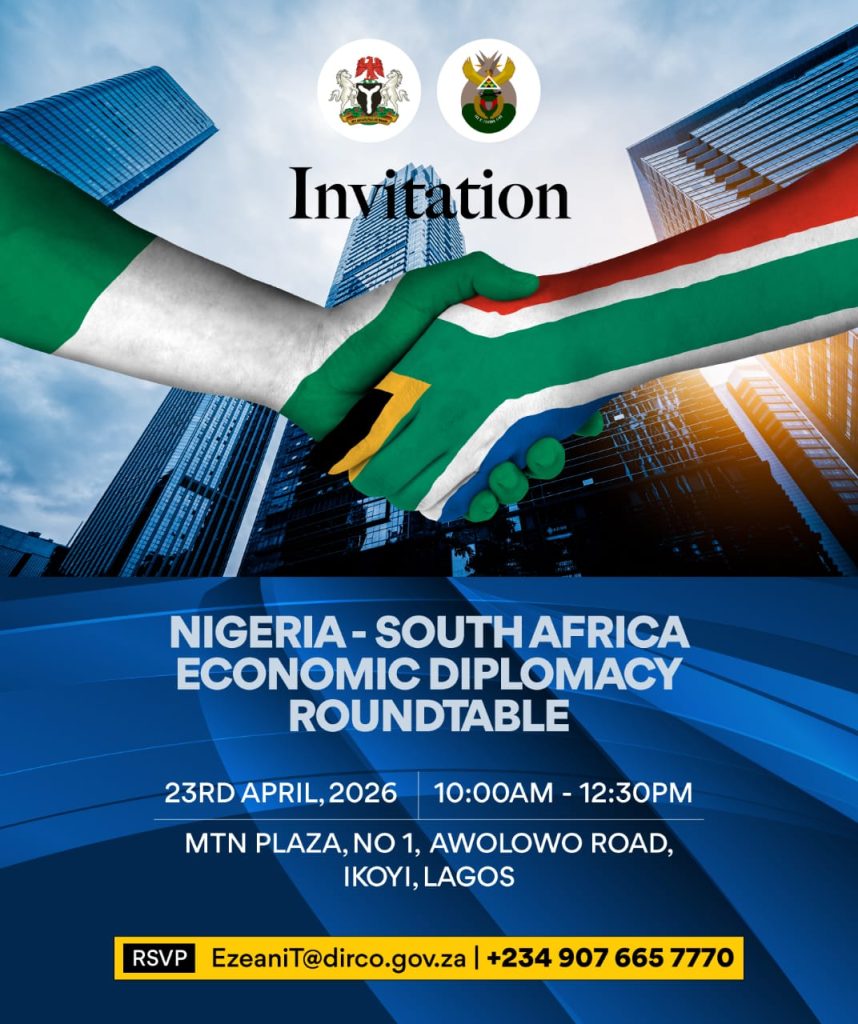
The second edition of the Nigeria–South Africa Economic Diplomacy Roundtable, held at MTN Plaza, Ikoyi, Lagos, recently brought together senior government officials, diplomats, and private sector leaders in a unified push to strengthen economic cooperation between Africa’s two largest economies.
The high-level engagement focused on transforming long-standing diplomatic relations into measurable economic outcomes, with emphasis on trade facilitation, infrastructure development, digital transformation, and investment flows under the African Continental Free Trade Area (AfCFTA).

MTN: “We Are Co-Authors of Africa’s Future”
MTN Nigeria, through its representatives, reaffirmed its positioning as a central player in Africa’s economic integration journey.
Representing MTN Nigeria’s Chief Executive Officer, Karl Toriola, Onyinye Ikenna-Emeka, Chief Marketing Officer (CMO) at MTN Nigeria, declared that MTN is not merely participating in Africa’s development but actively shaping it.
She highlighted MTN’s expansive footprint across the continent, including digital infrastructure, fintech services serving millions, and major investments such as the 2Africa subsea cable project.
“We will not sit outside the conversation: we will be at the centre, not as sponsors, but as co-authors of Africa’s future.”
She stressed that Nigeria and South Africa represent the economic backbone of the continent and must drive digital inclusion, financial connectivity, and cross-border innovation.
Dominic Khumalo: “Africa Is One Story”
Dominic Khumalo, Senior Manager, Strategic Public Affairs, MTN Group, reinforced this position, describing Africa as “one story with many chapters,” shaped by shared economic realities.
“Together, Nigeria and South Africa are not just markets; they are the engines of Africa’s future.”
He urged both nations to remove barriers to trade and payments to accelerate AfCFTA implementation, stressing that large corporations must actively shape continental transformation.
NSACC: Nigeria and South Africa Must Lead Africa’s Economic Direction
The Chairperson of the Nigeria–South Africa Chamber of Commerce, Dr. Ije Jidenma, described the roundtable as timely, noting its importance in a shifting global economy.
She emphasized that economic diplomacy sits at the intersection of foreign policy and economic strategy, driving investment, trade, and development outcomes.
“We must move from potential to performance.”
She stressed the need for trust-based partnerships, joint ventures, and sustainable collaborations between both countries.
Dr. Jidenma identified infrastructure, energy, logistics, housing, and digital economy as priority sectors for cooperation, while urging stakeholders to remain focused on long-term continental goals.
South African Consulate: “Economic Diplomacy Must Deliver Results”
The South African Consul-General in Lagos, Nigeria, Dr. Bobby J. Moroe represented by Acting Consul-General of South Africa in Lagos, Ms.Kgothatso Xulu, stressed that economic diplomacy must go beyond dialogue and produce measurable outcomes.
She noted that Nigeria and South Africa together account for a significant share of Sub-Saharan Africa’s GDP, positioning them as continental economic leaders.
“Economic diplomacy must be structured, sustained, and result-driven.”
She highlighted opportunities in telecommunications and digital economy, stressing their role in driving inclusion and innovation.
She also pointed to Africa’s youth population as a major economic advantage if properly harnessed through skills development and digital empowerment.
DTIC: Infrastructure and AfCFTA Are Key to Integration
The Director for Africa Bilateral Economic Relations at South Africa’s Department of Trade, Industry and Competition, Calvin Tshililo Phume, emphasized infrastructure and trade corridors as critical drivers of continental integration.
He referenced progress under the AfCFTA and called for stronger implementation to boost intra-African trade, which remains below 20%.
“Africa’s development will be determined by how well we connect our economies.”
He highlighted the importance of linking regional trade corridors such as Lagos–Abidjan with Southern African logistics networks to create seamless trade flows.
NIPC: Removing Barriers to Investment
The CEO of the Nigerian Investment Promotion Commission, Aisha Rimi, called for stronger South–South cooperation to unlock investment opportunities.
She emphasized the importance of investor confidence, policy consistency, and improved legal frameworks.
“We cannot build investment growth without trust and collaboration.”
She highlighted the One-Stop Investment Centre as a key mechanism for simplifying investment processes and resolving regulatory challenges.
Rimi also pointed to MTN as a strong example of long-term investment success in Nigeria.
Lagos Government: “A Gateway for Investment and Innovation”
Mrs. Folashade Ambrose-Medebem, Lagos State Commissioner for Commerce, Cooperatives, Trade, and Investment represented by Dr. Adeyemi Adeyinka, Director, Operative Services, described Lagos as the economic heartbeat of Nigeria, contributing about 30% of national GDP.
He outlined major infrastructure developments including road networks, rail systems (Blue and Red Lines), and ongoing coastal highway and port expansion projects.
He emphasized Lagos’ transformation into a modern investment destination driven by the THEMES+ Agenda and strong digital and transport infrastructure.
“Lagos is more than a city; it is a living example of deliberate, people-centred governance.”
He also highlighted investment inflows of over ₦4.1 trillion in 2025 and more than $1.2 billion in digital infrastructure development.
South African investors were invited to take advantage of Lagos’ youthful population, improving business climate, and expanding logistics network.
Ambassador Goso: “From Dialogue to Implementation”
Ambassador Nyameko Goso, Chief Director for West Africa, South Africa’s Department of International Relations and Cooperation, described the roundtable as a strategic implementation platform under the Bi-National Commission between both countries.
He said the engagement moves beyond ceremonial diplomacy into actionable economic cooperation.
“This is not just a dialogue platform; it is about implementation.”
He commended MTN for enabling structured engagement between government and business, noting that outcomes from the roundtable would feed directly into official bilateral frameworks.
Goso emphasized that economic diplomacy is now essential due to global disruptions in trade, technology, and climate systems, urging both countries to adapt strategically.
He also highlighted the private sector as the key driver of innovation, innovation, investment, and job creation.
Shared Vision: From Dialogue to Action
Across all speeches, a unified message emerged: Nigeria and South Africa must move beyond dialogue into implementation.
Speakers agreed that both countries carry a continental responsibility to lead Africa’s economic integration through AfCFTA, private sector collaboration, and infrastructure development.
The private sector was widely recognized as the engine of growth, while governments were urged to create enabling environments that support innovation and cross-border investment.
Conclusion
The roundtable ended with a strong call for actionable partnerships, deeper trust, and measurable economic outcomes.
Stakeholders emphasized that the future of Africa depends on how effectively Nigeria and South Africa collaborate in trade, investment, and digital transformation.
“When Nigeria and South Africa work together, Africa moves forward.”
GATMASH NEWS
…News That Drives Impact
For advert placements and business inquiries, kindly reach us via:
📧 Email: [email protected]
📞 Tel/WhatsApp: +234 (0) 807 202 2024
We value your voice! Share your stories, eyewitness reports, and contributions with us anytime:
📲 SMS/WhatsApp: +234 (0) 807 202 2024
📧 Email: [email protected]
Visit us online: https://gatmash.com/