
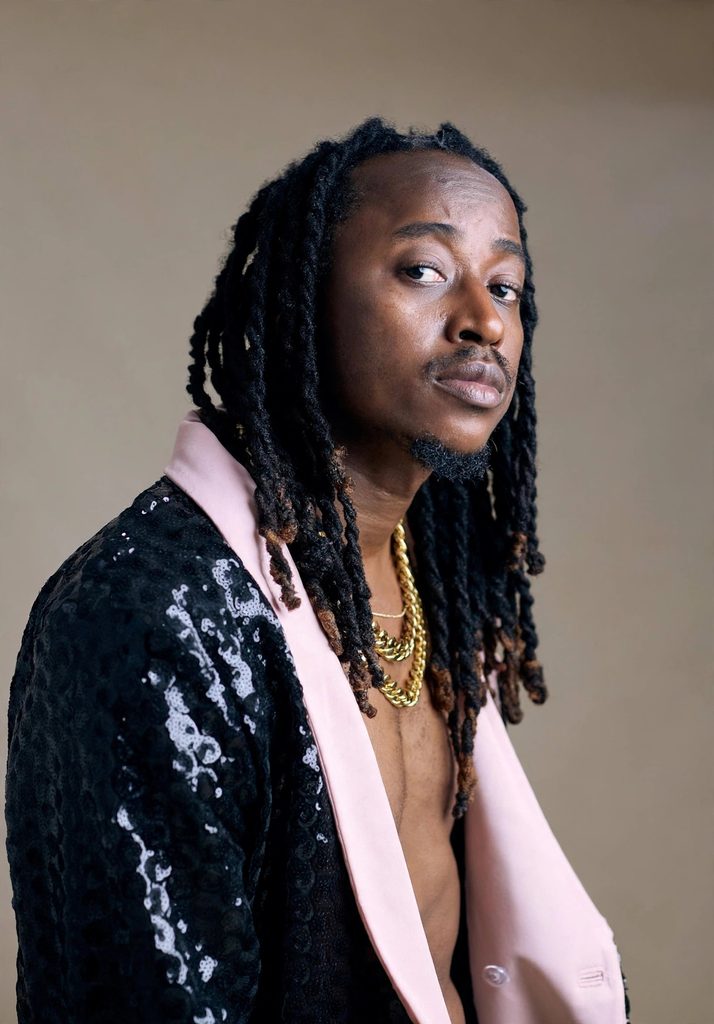
For years, his voice was missing from the mainstream music scene, but his passion for music never disappeared. Now, GT Da Guitarman is telling his story; opening up about the experiences, difficult choices, financial realities and industry challenges that took him away from the spotlight, and why he believes his best musical years may still lie ahead.
Born Olugbemiro Tokunbo Olaolu Akigbogun, GT Da Guitarman was one of the distinctive voices to emerge from Nigeria’s alternative Afro-soul movement during the influential Storm Records era.
With memorable songs such as Dreamer and Champion, his collaboration with General Pype, he carved out a musical identity defined by soulful vocals, expressive songwriting and exceptional guitar skills.
His journey brought him into the company of some of Nigeria’s notable music stars, including Darey Art Alade, Sasha P, Naeto C and Ikechukwu. He also shared a musical connection with the late rapper Dagrin, an experience he continues to remember fondly.

But beyond the music, there was another story unfolding. Following his departure from Storm Records around 2010/2011, GT Da Guitarman gradually stepped away from the mainstream entertainment scene.
He ventured into business, explored opportunities in the mining sector, established his own record label and focused on building a family. While the industry continued to evolve, questions remained about what had happened to one of its once-promising alternative music voices.
Now, in an exclusive interview with THERESA MOSES and OLUWATOSIN SIMON FALEYE, the singer breaks his silence, taking us behind the scenes of his career and revealing the circumstances that shaped his journey away from the spotlight. He speaks candidly about his Storm Records years, the realities of surviving outside mainstream entertainment, the transformation of the Nigerian music industry, the recognition or lack of it given to some of its pioneers and his determination to reclaim his place in the music scene.
And he is not returning empty-handed. With a new album in the works, potential collaborations on the horizon and a personal collection of more than 3,000 unreleased songs, the 42-year-old musician is preparing to reconnect with an audience that may have wondered whether they would ever hear from him again. After years away from the spotlight, GT Da Guitarman has a story to tell; and he insists that his music story is far from over.
Q: You emerged during one of the most influential periods of Nigerian contemporary music as part of the Storm Records generation. Looking back, how would you assess your journey and the label’s contribution to your career and the Nigerian music industry?
GT Da Guitarman: My journey has been quite adventurous. I started around 2005 and got signed to Storm Records through Darey Art Alade’s referral. That was about 21 years ago, and so far, I have released about three bodies of work and several singles. I have also received nominations on different award platforms and won a couple of awards.
I eventually took a break from the industry and explored other interests. Being part of Storm Records was a great experience. Their contribution was significant. Before I joined the label, I had already started gaining attention. I performed at the Night of a Thousand Laughs event, where Alibaba saw me, and I won a record deal.
However, my time at Storm Records was remarkable because I had the opportunity to work alongside several amazing artistes, including Darey Art Alade, Sasha P, Naeto C, Ikechukwu and others.
I also got to work on what I consider one of the biggest collaborations in Nigerian music, Champion with General Pype. I collaborated with Dagrin shortly before his death as well. At that time, GT Da Guitarman was something of a sweetheart in the industry. I have beautiful memories of that period, and I remain grateful for the experience.
Q: Your alternative Afro-soul sound, exceptional guitar skills and distinctive vocals set you apart from many artistes of your generation. Did staying true to that identity ever limit your commercial success or create challenges in the industry?
GT Da Guitarman: Honestly, I cannot say that was the reason I stepped away from the forefront of mainstream music. I also took a break at some point, got married and ventured into other things. At the time, my sound was not limiting. There were occasions when clubs would practically stop whatever was happening so I could perform. I had several performances at weddings, corporate events and other platforms. Those were amazing moments.
However, I understand the point about the kind of music that gets heavy rotation in clubs, on the streets and on certain platforms. My music may not have reached all those spaces, but there were also platforms my music reached that some other artistes could not access. So, I would say my sound gave me a distinct identity and opened other opportunities.
Q: You stepped away from mainstream music for an extended period and explored other business interests. What informed that decision, and what was happening behind the scenes during those years?
GT Da Guitarman: When I left Storm Records around 2010 or 2011, the label was also going through a difficult period and eventually fizzled out. I wanted to establish my own record label, Ember Entertainment, which I started. There were other people who wanted to sign me, and I remember having meetings with several industry players. However, having come from Storm Records, I felt I could build something of my own.
It was not easy. I also wanted to have a family. One thing I felt I missed as a child was having a family around me, so I craved that experience. I eventually got married and ventured into other businesses. I went into mining and sales, among other things. In those industries, I was able to establish myself, although I did not necessarily find the fulfillment I was looking for.
Another major factor was the financial demands of sustaining a music career. I could no longer fund the music the way I wanted. There was also a major revolution in the industry. The internet age arrived with tremendous force, but many of us did not initially understand how much it would change everything. Some of us thought it was just a passing trend.
Today, I have a morning show on TikTok, and I do it every day. It has been an amazing experience reconnecting with my fans. Our phones have practically become our television sets.
Everything has changed, and I keep telling people that the older you get, the more you need to grow and adapt. You must be willing to embrace the ways of younger generations. Some people feel they are too old to change, but that is the real challenge. I now call myself Gen Z because it is about having a Gen Z mindset.
Q: Did you ever feel forgotten or overlooked by an industry you once helped shape? And how did you adjust to life outside the spotlight?
GT Da Guitarman: The transition was quite interesting. It was almost like the easiest thing for me to do because, in every industry I entered, I found opportunities to establish myself. I managed a granite quarry in Oru-Ijebu town, another quarry around the Olorunsogo axis of Oyo State, and one in Erua in Ibarapa East, Oyo State. We were involved in supplying materials for construction projects, including railway construction. We also had several sites around different locations.
I travelled extensively and visited places many people may never have the opportunity to see.
One particularly memorable experience was visiting a mining site deep inside a forest around Imeko. We drove for about an hour into the forest and then travelled further by motorcycle before reaching the location. It was a beautiful place, rich in natural resources. The people living there regarded parts of the area as sacred and were reluctant to allow mining activities. Those experiences gave me a different understanding of Nigeria and its resources. I began to see the raw materials that make up almost everything around us.
The paint on a wall, the sand used in blocks, the minerals in tiles and the iron in different products all come from natural resources. I have seen many things at their most basic form, and those experiences have given me a depth of understanding that I intend to bring into my music. Mining is still something I would like to return to.
As for coping with life outside the spotlight, God has been faithful. I have always believed that I am an ordinary man whom God gave an opportunity to stand on a big stage. If He chooses to give me that opportunity again, He can. I have also been involved in trading. At every stage of my life, I have found a way to pick myself up and move forward.
Q: You have gathered experiences in music, mining and business that many people of your generation may never have encountered. How do you intend to use those experiences to educate younger Nigerians, particularly about opportunities in sectors such as mining?
GT Da Guitarman: Part of educating people is what I am already doing, even if I am doing it subtly. I am not under pressure to explain everything I have experienced, but I believe people need to become more conscious of what is around them. Nigeria is not a poor country. We have enormous resources, but many people are not conscious of the opportunities available to them.
People are often focused on quick money, betting, Ponzi schemes and social media trends.
Everybody wants to become popular overnight, without necessarily having a clear direction. I have seen the richness of this country firsthand. There are people making enormous money from activities in the forests and other locations, while many Nigerians do not even know what is available. I cannot fully explain some of the things I have seen. You have to take that journey yourself to understand the opportunities.
However, mining also has its challenges. When I was involved in the business, we struggled to get trucks and excavators. There were also situations where fellow Nigerians took advantage of us. So, there is a lot that needs to be done to make the sector more attractive to investors and entrepreneurs.
My message to young people is simple: there is money in this country if you are willing to look beyond the obvious opportunities. Identify something people are not paying attention to and develop an interest in it. I do not have all the money in the world, but I have seen how blessed Nigeria is. We must learn to recognise and explore the opportunities around us.
Q: You mentioned a difficult experience in Kano during your mining business. Can you tell us what happened?
GT Da Guitarman: That was a crazy experience. At the time, I was mining in Oyo State and had difficulties getting trucks in Lagos and Ogun State. I had to travel all the way to Kano because someone told me he had trucks available.I met a man named Abubakar, who claimed he had about six trucks to supply. I paid him, but he provided only one truck. He kept assuring me that the remaining trucks were on their way. I refused to leave Kano until I saw the other trucks. We went to different locations, but the trucks never appeared. Eventually, I realised that I had been deceived. I decided to take the matter to court. I returned to Kano and stayed there for about a month, determined to find him. He had relocated to Maiduguri, but I eventually tracked him down. We caught him through a situation involving one of his workers, and I took the matter to court. The court ordered him to refund my money. He made the first installment but did not complete the repayment. I kept following up with the court bailiff, but eventually, I had to let the matter go. It was a difficult experience, but I learned my lesson.
Q: The Nigerian music industry has evolved significantly, with Afro-beats becoming a global phenomenon. Having witnessed this transformation firsthand, what do you think today’s generation of artistes and music executives are getting right or wrong?
GT Da Guitarman: My disposition is to learn from them. The people who are getting it right are already doing so, and I am trying to understand their templates, replicate what works and possibly do even better. I admire what Burna Boy is doing, selling out arenas. I love his music. I also appreciate Wizkid and Davido, and Rema is doing very well too. I do not think I am in a position to tell them what they are doing wrong. There is a lot to learn from what they have achieved.
However, I think one area that deserves attention is infrastructure within Nigeria. Afro-beats has become a global phenomenon, but we also need stronger structures at home to support the industry.
Some of our biggest artistes spend considerable time outside the country. We need an environment that makes it possible for the industry to grow sustainably here.
Q: Do you believe the Nigerian music industry has adequately recognised and celebrated the contributions of pioneers like you and other artistes who helped shape contemporary Nigerian music?
GT Da Guitarman: I don’t think so. In fact, I don’t think we have a properly structured music industry in the first place. When we talk about an industry, we should be talking about a collective structure that protects artistes’ rights and interests. We do not have that kind of structure functioning effectively. Those who should be putting such structures in place are sometimes more focused on other interests, including working with major labels outside the country.
We hear about new leadership and promises of reform, but a few months later, it often appears that things have returned to the same situation.
I also believe artistes from earlier generations have not received the recognition they deserve. People like Styl-Plus, J’odie, etc contributed to the development of Nigerian music. 2Face Idibia has received considerable recognition, but there are many others whose contributions deserve more attention. Personally, I do not wait for anyone to celebrate me. I celebrate myself. I know what I have contributed to the industry, and it means a lot when younger musicians tell me I inspired them to play the guitar. That is beautiful. I am also working on an album, and I am excited about what I am creating. I believe the recognition will come when the time is right. Perhaps I could even become president of PMAN someday. Who knows?
Q: What was your relationship with the late Sound Sultan, and how did his death affect you?
GT Da Guitarman: My relationship with Soud Sultan was beautiful. He was like an elder brother to me, and I respected him greatly. Whenever I needed advice, I could reach out to him. I remember when I left Storm Records; he was one of the first people I contacted.
We met at Golden Tulip in Festac, and he gave me very useful advice. We eventually worked together on a song with Baba D, African China and a few other artistes. The song was written by Wole Soyinka and was titled I Love My Country.
His death affected many of us. It was a painful reminder that life is fleeting. Today you are here, tomorrow you may be gone. That is why I keep saying that the things we fight over and worry about are not always as important as we think. What matters is the legacy we leave behind.
Q: Your return marks a new chapter in your career. What has changed about GT Da Guitarman, both musically and personally, and what should fans expect from this comeback?
GT Da Guitarman: A lot has changed, personally and musically. For one, I now wear dreadlocks. I no longer wear the hat people were accustomed to seeing me in. I also believe my music has become better. Those who have been following my Morning Coffee show on TikTok have had the opportunity to experience some of what I can do. I started the show in October 2026 and performed for two hours every day throughout the month. We continued in November, and the experience has been amazing. I believe I am smarter and more deliberate now. I do not jump at everything.
One major difference between the GT of those days and the GT of today is that I was trying to prove to myself and everybody else that I was a musician. Today, I already know who I am and what I am capable of doing. I am not under pressure to prove anything. I cannot wait for people to hear the projects I am working on. I kid you not; I still want to rule this industry. I am just 42, and I intend to sing until I am 82.
Q: At this stage of your journey, what legacy do you want to leave behind, and what would you like the Nigerian music industry, particularly young artistes, to remember about GT Da Guitarman?
GT Da Guitarman: I want people to know that I am unstoppable. Anything I put my mind to, I believe I can accomplish. One of my mantras is, “I can do anything.” Another is, “I am always grateful, but never satisfied.” If there is anything I want people to remember about me, it is that I can do anything. And they can do anything too. If I can do it, they can do it.
Q: Take us back to your background. Where did your journey begin, and how did music become such an important part of your life?
GT Da Guitarman: I was born in the United Kingdom on September 8, 1984. My parents are from Ogun State, and I moved back to Lagos, Nigeria, when I was about two years old. I studied Economics at Lagos State University and attended Mayflower Secondary School. I am a lover of knowledge, and one of my mentors is Tai Solarin. I respect him greatly and still read his works. One of the things I hold on to is the belief that a person can become whatever they choose to be through determination and hard work. I believe strongly in that philosophy.
I am a hardworking person. I enjoy thinking about new ideas and pursuing them. I was raised by a single mother. My father left home when I was still young, around the age of 11. I have two siblings: an elder sister and a younger brother. In many ways, I taught myself most of what I know today. I am a self-taught guitarist.
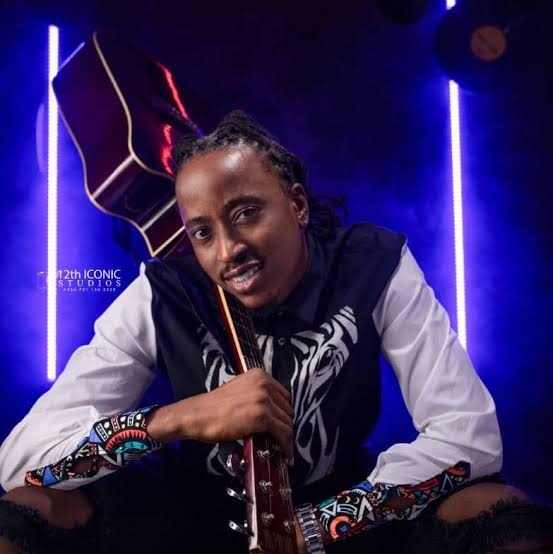
My journey into music was almost accidental. My elder sister, Opeyemi, used to bring songs she learned in the choir home and teach me. She would sing the treble while I sang the tenor, and we enjoyed doing that together.
My father was also a great music lover. One of my fondest memories of him is listening to Ebenezer Obey and other musicians while music played in the house. My mother has a beautiful voice too.
I later met friends who were interested in music, and we formed groups. I started a group called Pairs of Gloves in Amuwo Odofin and later joined another group called Four Generations. Many of the people I started with eventually stopped making music, but my passion continued. Music has saved me in many ways. It opened doors I could never have imagined and brought me favour in the sight of many people. I remember thinking about business even as a young boy. At one point, I suggested selling Gala because I noticed how many people passed through our area every day. I also wanted to do factory work and approached a family friend, Mr. Obaseki, to ask for a job, but he told me it was not something I could do. Then I found music, and it changed everything for me. I believe God has carried me through life. I am an ordinary man who refuses to be limited by circumstances or by other people.
Q: You have spoken about your desire to have a family and how personal experiences shaped your life. How have those experiences influenced your outlook on marriage and relationships?
GT Da Guitarman: I have come to realise that marriage is complicated, and perhaps it may not be for someone like me. I have always wanted a family. When my first child was born, I named her Aramide because I thought my own family had finally come together. When my first son was born, I named him Ayomide, meaning my joy has come. I love my children deeply. There was a difficult period when they moved away, and I had to continue supporting them and paying their school fees from a distance. I remember asking that they should come and spend some time with me, but the arrangement was that they would visit during holidays. I found it difficult to understand the idea of my children coming to their own home only for holidays, but I accepted the situation.
I am grateful to have children who genuinely love me. They call me, and hearing them say, “Daddy, I love you,” brightens my day. I have also learned that people can change their minds about what they want from life. It does not always mean one person is bad and the other is good. I believe forgiveness is important in marriage and relationships. I am someone who believes in forgiveness, but people do not always approach relationships the same way. For now, I want to focus on my music, enjoy life and take care of my children. I am grateful to the women who have shared that part of my journey with me.
Q: You have described music as something you cannot stop doing. Is it a passion, a profession or simply a means of survival?
GT Da Guitarman: I think music is almost a mental health condition for me because I cannot stop writing. I have books upon books of songs. I currently have more than 3,000 unreleased songs. Even the number of voice notes on my phone is unbelievable. I have thousands of recordings. There are two sides to music. There is the business of building a brand around your music, and there is the creative side of being a songwriter. Even if I am not releasing songs or promoting myself, I remain a musician because I am constantly writing.That is why I say music is almost a mental health condition for me. I cannot stop creating.
Q: Having written thousands of songs, have you written for other people, and do you have a personal favourite among your works?
GT Da Guitarman: I have written songs for different people, including my children. I even have a song for President Tinubu. I love all my songs. How other people relate to them is their choice. Some of my unreleased songs are among my favourites because I know the stories behind them and what went into creating them. For example, I wrote Dreamer in 1999, but it was not released until 2005. I have songs I wrote recently that people may not hear for a long time. Some may never even be released.
Q: What is your relationship with Darey Art Alade today and other artists?
GT Da Guitarman: I actually checked my phone recently and realised Darey’s number was still there. I wondered why I had not reached out to him. He is doing very well, and I am proud of him. I have a lot of respect for him. Sometimes, I think the passion for the madness of the music industry changes as you grow older. You begin to understand what the entertainment business requires.
There are certain expectations and demands that I am not willing to compromise on. I am a very stubborn person in that regard. I will not reduce my standards or compromise my values just to remain relevant in the industry.
Music has never been a do-or-die affair for me. I will continue releasing my songs as much as I want. If people connect with them, wonderful. If not, I am still grateful for what I have achieved. I have other streams of income, so I am not dependent on music alone. People still request Dreamer on my live show. I perform it several times because fans keep asking for it. That alone means a lot to me. If tomorrow I decide to step away again, I will still look back at what I have achieved with gratitude.
Q: Are there plans for collaborations as part of your comeback?
GT Da Guitarman: Yes. I intend to collaborate with several artistes, and that is one thing I have not done enough over the years. I have been thinking about reaching out to people I have worked with before, including Darey. Jeremiah Gyang also sent me a direct message recently and requested my number. I was excited to hear from him because he is someone I respect. There are several collaborations in the works, and I am looking forward to getting back out there.
GATMASH NEWS
…News That Drives Impact
For advert placements and business inquiries, kindly reach us via:
📧 Email: [email protected]
📞 Tel/WhatsApp: +234 (0) 807 202 2024
We value your voice! Share your stories, eyewitness reports, and contributions with us anytime:
📲 SMS/WhatsApp: +234 (0) 807 202 2024
📧 Email: [email protected]
Visit us online: https://gatmash.com