

By: Theresa Moses
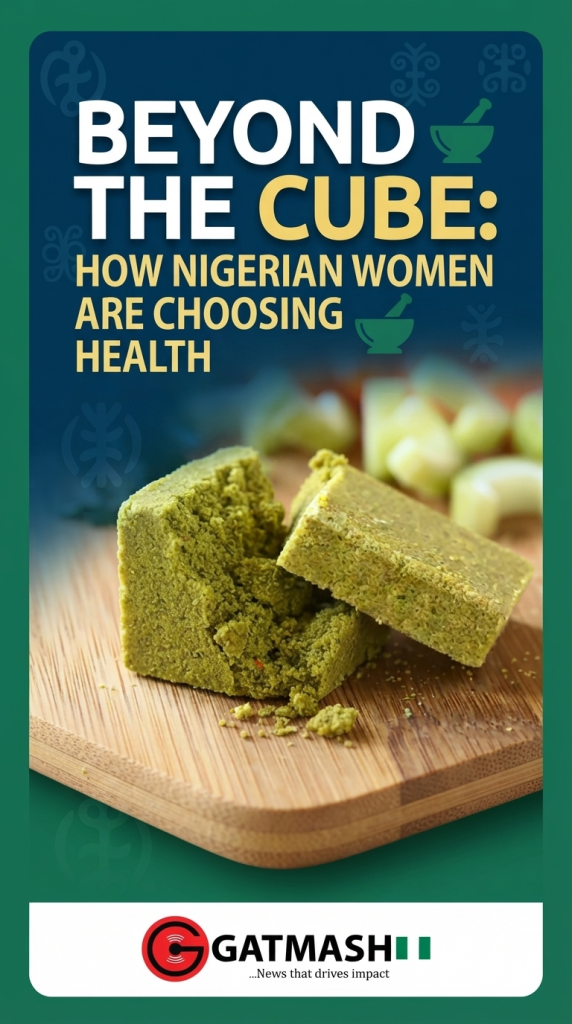
At Mile 12 Market in Lagos, the morning rush begins long before most families sit down for breakfast. Women move briskly through crowded aisles, comparing prices, selecting vegetables, bargaining for fish and carefully examining food products that will eventually make their way into family meals.
Among the countless choices confronting them are dozens of seasoning cube brands, each competing for space on supermarket shelves and in market stalls across Nigeria.
Some promise superior taste. Others emphasize affordability. Several promote nutritional benefits.

For many women, choosing a seasoning cube may appear to be a simple shopping decision. In reality, it has become part of a much larger conversation about nutrition, food safety and family health.
As food prices continue to rise and consumers become increasingly health-conscious, Nigerian women are asking difficult questions: What makes a meal truly nutritious? Can seasoning cubes alone provide the nutrients a family needs? How can families maintain healthy diets without stretching already strained household budgets?
The answers are revealing a growing shift in how Nigerian families approach food.
The Myth of the “Magic Cube”
For decades, seasoning cubes have been a staple in Nigerian kitchens. Whether preparing jollof rice, vegetable soup, beans or stews, many households consider them indispensable.
Yet nutrition experts insist that consumers should not mistake flavour enhancement for complete nutrition.
According to nutrition advocate and Director of Gfud & Buka, Fareedah Garu, the health value of a meal extends far beyond any single ingredient.
“Consumers should focus less on the brand name and more on the nutrition information and ingredient list,” she explains.
She believes that while seasoning cubes can improve taste, they should only complement a healthy diet rather than define it.
“A healthy diet is determined by the overall quality of food consumed, not by a single ingredient,” Garu says.
Her perspective challenges a common misconception among consumers who often assume that products marketed as nutritious automatically translate into healthier meals.
Instead, she emphasizes moderation, careful label reading and the inclusion of fresh herbs and spices such as onions, garlic, ginger and peppers.
At Gfud & Buka, these natural ingredients remain central to meal preparation.
Mothers Are Returning to Natural Solutions
For Mrs. Modinat Adenekan-Yusuf, healthy cooking begins with tradition.
Like many Nigerian women, her preference for a particular seasoning brand was inherited from her mother.
“I grew up loving a particular brand of seasoning from my late mum and I continued using that brand for my meals,” she says.
Yet seasoning cubes alone do not define her cooking.
She supplements meals with natural ingredients that have been part of Nigerian cuisine for generations.
“I am a lover of natural spices, so I add natural spices to my meals. The likes of garlic, ginger and scent leaf.”
For Adenekan-Yusuf, the attraction goes beyond taste.
These ingredients are affordable, accessible and contribute to healthier cooking practices.
Her advice to other mothers is straightforward.
“Always add natural spices to your meals because some of the contents of some brands are not too healthy and should be moderated.”
Across many Nigerian homes, women are rediscovering what previous generations already understood: nutritious meals often begin with simple, locally available ingredients rather than heavily processed alternatives.
Rediscovering Indigenous Wisdom
This return to traditional cooking methods is gaining support among culinary experts.
Chef Chiamaka Nwakalor Egemba, founder of Dish L’Afrique and a strong advocate for African cuisine, believes Nigerian families already possess many of the tools needed to improve nutrition.
“Our indigenous ingredients remain some of the healthiest foods available,” she notes.
Vegetables such as ugu and efo, alongside beans, crayfish, ginger, garlic and peppers, have nourished generations of Nigerians.
According to her, seasoning cubes should complement these ingredients rather than replace them.
“Healthy cooking is about balance,” she says. “We must preserve our culinary heritage while embracing food science that helps improve safety and quality.”
Her position highlights an important lesson emerging from nutrition conversations nationwide: modernization does not require abandoning traditional knowledge. Instead, the two can work together.
Consumers Are Becoming More Informed
The shift is also evident among food vendors and entrepreneurs who interact with consumers daily.
Mrs. Temitope Olushola, owner of MO’Cuisine Express Venture, has witnessed significant changes in consumer behaviour over recent years.
“Most customers want a seasoning that gives good taste and aroma,” she says.
“But an increasing number now read product labels to check ingredients, expiry dates and nutritional information.”
She notes that many consumers specifically ask about sodium content, natural ingredients and food safety practices.
This represents a major departure from previous buying habits where taste and price were often the primary considerations.
“Compared to a few years ago, more customers ask questions about what goes into the food they eat,” she explains.
Some request meals prepared with less seasoning or less salt.
Others inquire about ingredient sourcing and food hygiene.
Many, she says, are motivated by growing concerns about health conditions such as hypertension, diabetes and kidney-related illnesses.
Although taste remains the leading factor influencing purchasing decisions, quality and health considerations are steadily gaining ground.
“Some customers are willing to pay a little more for products they believe are healthier or of better quality,” Olushola says.
Food Safety Begins Before the Kitchen
One of the most significant findings emerging from conversations around nutrition is that food safety begins long before food reaches consumers’ kitchens.
Recognizing the importance of public education, Nestle Nigeria recently engaged suppliers, distributors, consumers, journalists and digital creators in a series of activities designed to increase understanding of food quality and safety across the food value chain.
The initiative provided insights into ingredient sourcing, manufacturing processes, distribution systems and consumer education.
Participants explored how locally sourced Nigerian soya beans are transformed through carefully controlled fermentation processes that draw inspiration from traditional African food preparation techniques.
For generations, communities across Nigeria have relied on fermented foods such as iru, dawadawa and ogiri.
Modern food science now applies similar principles within controlled environments to maintain consistency, quality and food safety.
The initiative demonstrated that ensuring food safety is not solely the responsibility of consumers.
Farmers, manufacturers, distributors, retailers and regulators all play critical roles in safeguarding food quality.
Education Is Emerging as the Solution
While the market offers consumers more choices than ever before, experts agree that knowledge remains the most powerful tool available to families.
For Garu, healthy eating is not about perfection. It is about consistency and balance.
Her advice is practical: “Eat a variety of foods. Fill half the plate with vegetables whenever possible.
Choose whole foods such as beans, fruits, vegetables, yam and sweet potatoes.
Reduce excessive salt and highly processed foods.
Drink sufficient clean water.
Practice proper food hygiene”.
These recommendations may sound simple, but they represent achievable solutions for millions of households navigating economic and nutritional challenges.
Beyond the Cube
As the day’s shopping concludes and market stalls begin preparing for another wave of customers, countless Nigerian women head home carrying bags filled with vegetables, grains, proteins and seasoning cubes. The ingredients may differ from one household to another.
But the goal remains the same.
- To nourish families.
- To protect health.
- To stretch limited resources without compromising quality.
The growing awareness among consumers suggests that the conversation around nutrition is evolving. Women are reading labels. They are asking questions. They are returning to traditional ingredients. They are seeking information and making deliberate choices about what goes into the family pot.
In a marketplace crowded with competing brands and nutrition claims, many are discovering a simple truth. Good health cannot be purchased in a single packet. It begins on the farm. It is strengthened through responsible food production. It is supported by informed consumer choices.
And ultimately, it is shaped by the millions of Nigerian women who stand over cooking pots every day, making decisions that influence the health and future of their families.
The real secret ingredient is not found in any seasoning cube. It is knowledge. And that knowledge may be Nigeria’s most powerful recipe for a healthier future.
GATMASH NEWS
…News That Drives Impact
For advert placements and business inquiries, kindly reach us via:
📧 Email: [email protected]
📞 Tel/WhatsApp: +234 (0) 807 202 2024
We value your voice! Share your stories, eyewitness reports, and contributions with us anytime:
📲 SMS/WhatsApp: +234 (0) 807 202 2024
📧 Email: [email protected]
Visit us online: https://gatmash.com