
- As GTCO prepares to host its 16th Annual Autism Conference, Theresa Moses examines why acceptance; not just awareness, is the foundation for creating inclusive families, classrooms, workplaces and public spaces for people on the autism spectrum.
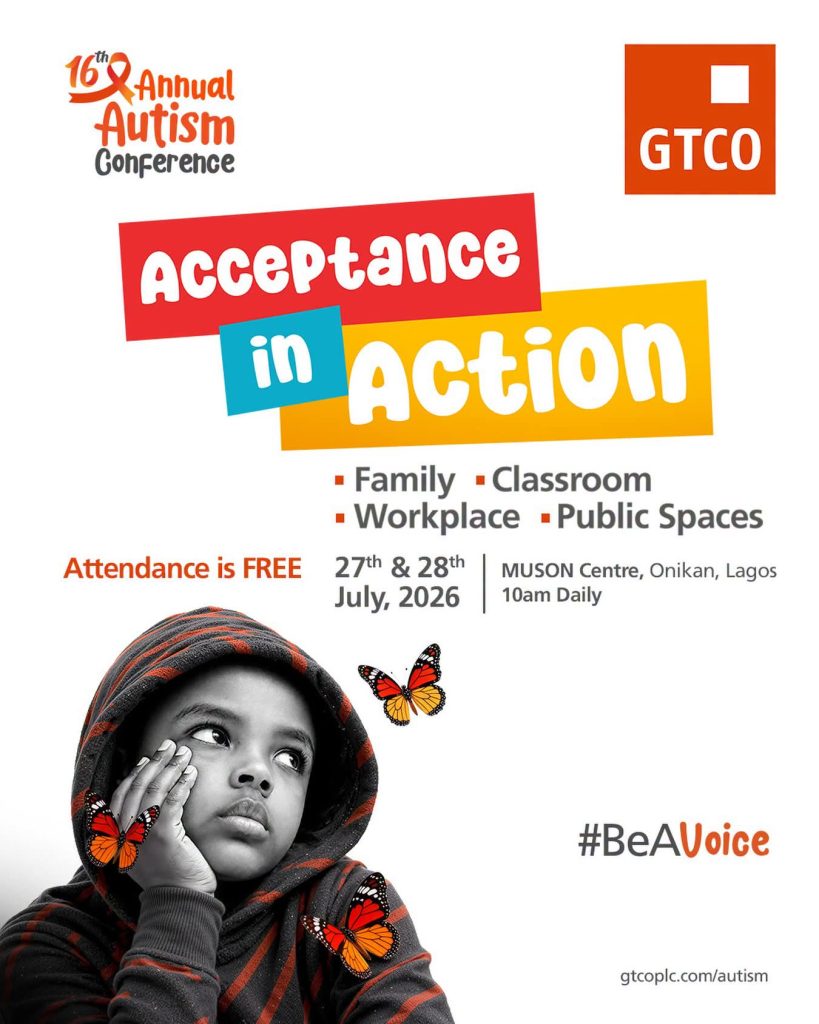
On Monday 27th July 2026, the MUSON Centre, Onikan, Lagos, will host the opening day of GTCO’s 16th Annual Autism Conference, marking the beginning of a two-day event that has become one of Africa’s leading platforms for autism awareness, advocacy and inclusion.
For two days, parents, caregivers, educators, healthcare professionals, policymakers, employers, journalists and autism advocates will gather to share knowledge, learn from experts and explore practical ways to build a more inclusive society for people on the autism spectrum.
For many, it is another annual event on the calendar. For countless families raising children with Autism Spectrum Disorder (ASD), however, it represents something much deeper: a chance to find answers, receive professional guidance, connect with others facing similar challenges and discover that they are not alone.
For sixteen years, Guaranty Trust Holding Company (GTCO) has sustained one of Africa’s most impactful corporate autism initiatives, demonstrating that corporate social responsibility can go beyond philanthropy to become a catalyst for social change.

This year’s conference, themed “Acceptance in Action: From Family to Classroom to Workplace to Public Spaces,” sends a powerful message that awareness alone is no longer enough.
The next step is acceptance. And acceptance requires action.
Understanding Autism Beyond the Myths
Despite growing awareness, Autism Spectrum Disorder (ASD) remains one of the most misunderstood developmental conditions in Nigeria.
Many people still associate autism with myths rather than facts. Some believe it is caused by poor parenting.
Others think it is a spiritual problem or a condition that can be “outgrown.”
Medical experts disagree. Autism Spectrum Disorder is a neurodevelopmental condition that affects how an individual communicates, interacts socially, processes information and experiences the world.
The word “spectrum” reflects the diversity of the condition. No two autistic individuals are exactly alike.
Some communicate fluently, while others rely on gestures, pictures or assistive communication devices.
Some require lifelong support, while others pursue higher education, build successful careers and live independently.
Some are highly sensitive to sound, light or touch, while others may develop exceptional abilities in areas such as mathematics, music, technology or art.
Autism is not an illness. It is not contagious. It is not the result of bad parenting.
Most importantly, it is not a reason to deny anyone the opportunity to live a full and meaningful life.
The Reality Many Families Face
For many Nigerian families, receiving an autism diagnosis is only the beginning of a much longer journey.
Finding qualified specialists can be difficult. Accessing therapy is often expensive. Inclusive schools remain limited.
Many parents still encounter discrimination when seeking educational opportunities for their children.
Some are advised to keep their children away from public gatherings.
Others face criticism from people who misunderstand autism-related behaviours. These experiences leave many families isolated. Some stop attending social events altogether.
Others spend years searching for answers before receiving the right diagnosis. Behind every autism statistic is a family learning to navigate unfamiliar territory.
That is why platforms that combine education, advocacy and practical support remain essential.
GTCO’s Sixteen-Year Commitment
When GTCO launched its Autism Programme sixteen years ago, autism received far less public attention than it does today.
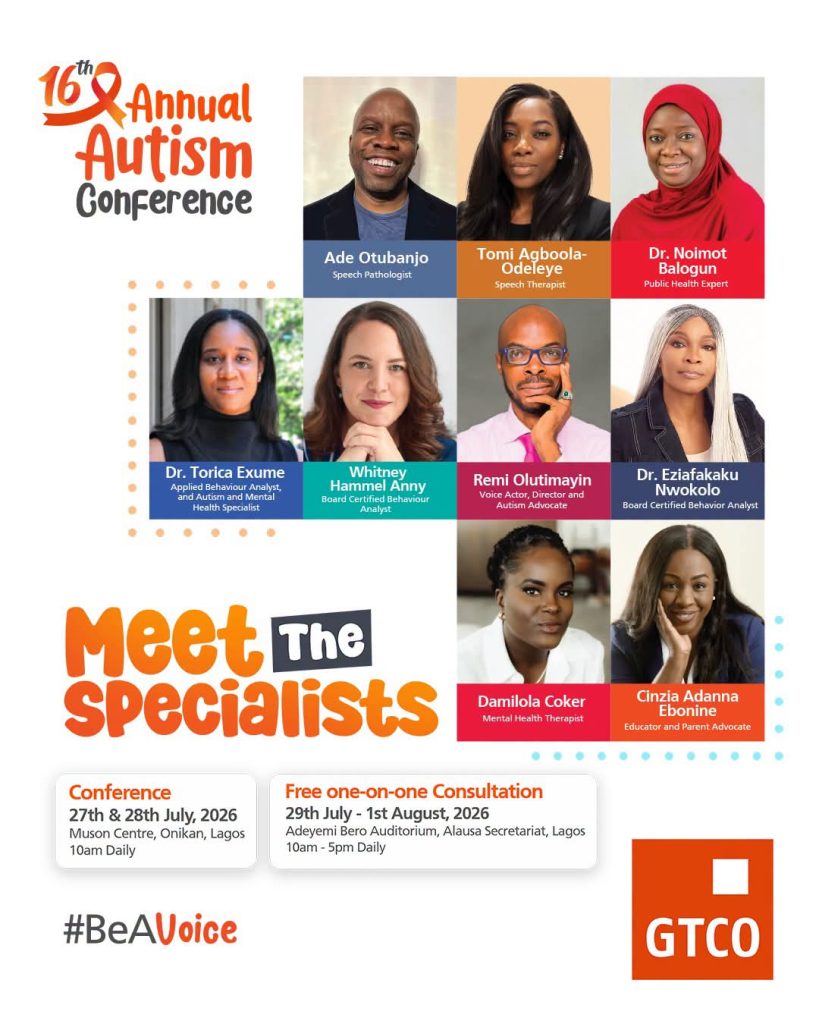
Over the years, the initiative has evolved into one of West Africa’s leading platforms for autism advocacy, bringing together local and international specialists to share knowledge, promote inclusion and provide free consultations for families.
The programme has helped shift conversations from fear to understanding and from stigma to acceptance.
Commenting ahead of this year’s conference, the Group Chief Executive Officer of GTCO Plc, Segun Agbaje, reflected on the programme’s journey.
“Sixteen years ago, we set out to help families navigate a journey that too often felt isolating. Today, this programme stands as proof of what sustained commitment can achieve.”
His message reflects the philosophy behind the initiative.
Sustained commitment, not one-off interventions; is what creates lasting impact.
He added: “No single institution can build an inclusive society alone. It takes families willing to advocate, educators willing to adapt, employers willing to open doors, and policymakers willing to act.”
Those words underscore an important reality. Autism inclusion is everyone’s responsibility.
Acceptance Begins at Home
One of the strongest messages from the media briefing ahead of the conference was that acceptance starts with families.
Parents are often the first teachers, first advocates and first source of emotional support for autistic children.
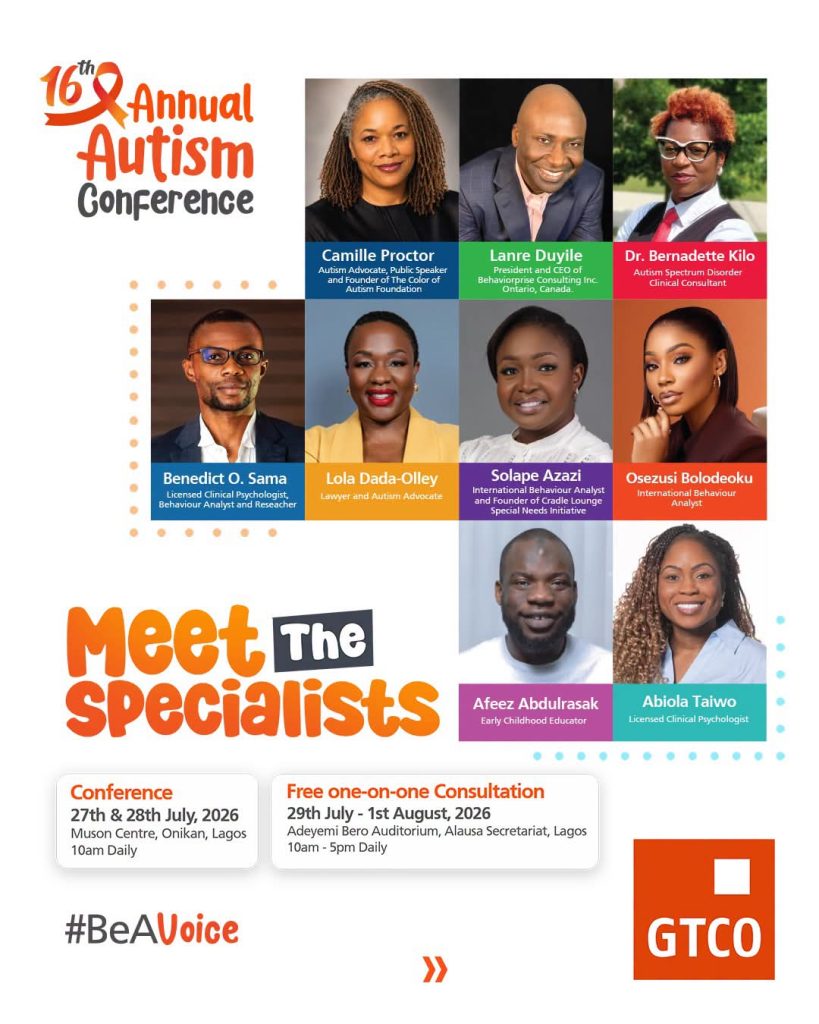
Osezusi Bolodeoku, International Behaviour Analyst, explained that every autistic child develops differently. Progress should never be measured by comparison with other children. Instead, families should celebrate every achievement, no matter how small.
A child learning to communicate a need. A child making eye contact. A child adapting to a classroom routine.
These milestones deserve recognition. Acceptance at home lays the foundation for confidence in society. Schools Must Move Beyond Inclusion on Paper. Education remains one of the biggest challenges facing autistic children.
While many schools describe themselves as inclusive, Dr. Eziafakaku Nwokolo, Board Certified Behaviour Analyst argue that genuine inclusion requires much more than admitting children with developmental differences.
Teachers need specialised training. Learning environments should accommodate different communication and learning styles.
Classmates should also be taught about empathy, diversity and respect. Inclusive education benefits every child, not only those on the autism spectrum. When children learn together, they grow together.
Creating Autism-Friendly Public Spaces
One of the most practical discussions during the media briefing focused on public spaces.
Unlike physical disabilities, autism has no visible physical characteristics.
An autistic person may appear no different from anyone else while experiencing communication challenges or sensory overload.
Solape Azazi, International Behaviour Analyst at the briefing explained that simple adjustments can significantly improve accessibility.
- Clear visual instructions.
- Picture-based communication tools.
- Quiet sensory spaces.
- Staff training.
These changes are neither expensive nor complicated. They simply require awareness, planning and empathy.
Why Compassion Matters
Throughout the briefing, one word kept resurfacing. Empathy.
Autism advocates reminded participants that many misunderstandings arise because people judge behaviours they do not understand.
Instead of reacting with impatience, they encouraged Nigerians to pause, observe and respond with compassion.
An autistic child having a sensory overload is not being deliberately difficult.
An autistic adult struggling with communication is not being disrespectful.
Understanding these differences changes how society responds.
Compassion often succeeds where criticism fails.
The Media Has a Responsibility
Journalists also have an important role to play.
During the media interaction, GTCO’s Chief Communication Officer and Head of Group Communication, Oyinade Adegite thanked the media for years of partnership in helping educate Nigerians about autism.
She noted that responsible reporting has helped communities understand that autism is a developmental condition and should never be a source of stigma.
Autism advocates equally urged journalists to use accurate terminology.
Words shape perception. Reporting that promotes dignity and understanding contributes to a more inclusive society. The media can either reinforce stereotypes or dismantle them. The choice matters.
Beyond Corporate Social Responsibility
Many companies invest in Corporate Social Responsibility. Few sustain programmes for sixteen consecutive years.
GTCO’s Autism Programme has remained relevant because it addresses a genuine societal need.
The initiative combines advocacy with action.
- Education with intervention.
- Awareness with practical support.
It reminds us that meaningful corporate citizenship is measured not only by financial investment but also by lasting social impact.
Why GTCO Autism Conference Matters
This year’s conference will feature discussions led by respected local and international experts covering early intervention, behavioural support, communication strategies, inclusive education and caregiver support.
The event will be followed by free one-on-one consultations from July 29 to August 1 at the Adeyemi Bero Auditorium, Alausa, Ikeja, where families can receive guidance from developmental and medical specialists.
For many parents, these consultations may provide answers they have been searching for over several years.
For professionals, they offer opportunities to strengthen collaboration.
For society, they present another opportunity to learn.
Building a Society Where Everyone Belongs
The conversation about autism should not end when the conference closes.
Its real impact begins afterwards.
- When parents become more patient.
- When teachers become more inclusive.
- When employers recognise talent instead of limitations.
- When public institutions become more accessible.
- When journalists tell stories that educate instead of stigmatise.
- When communities choose understanding over judgment.
That is what acceptance in action looks like.
Sixteen years ago, GTCO started a conversation that has continued to change lives.
Today, that conversation is no longer about awareness alone. It is about building a society where autistic children and adults are respected, supported and given equal opportunities to reach their full potential. Because every individual deserves dignity. Every family deserves support. And every society becomes stronger when no one is left behind.
Participation is free, with registration open to families, caregivers, educators, healthcare professionals, employers, policymakers, journalists and members of the public interested in advancing autism awareness, acceptance and inclusion.
GATMASH NEWS
…News That Drives Impact
For advert placements and business inquiries, kindly reach us via:
📧 Email: [email protected]
📞 Tel/WhatsApp: +234 (0) 807 202 2024
We value your voice! Share your stories, eyewitness reports, and contributions with us anytime:
📲 SMS/WhatsApp: +234 (0) 807 202 2024
📧 Email: [email protected]
Visit us online: https://gatmash.com