
From Okere to Ogidigben, Ogbe-Ijoh to Ugborodo, the story of Warri is bigger than ethnic rivalry. It is a story of people, shared communities, oil, politics, old wounds; and the urgent search for common ground.
By Theresa Moses
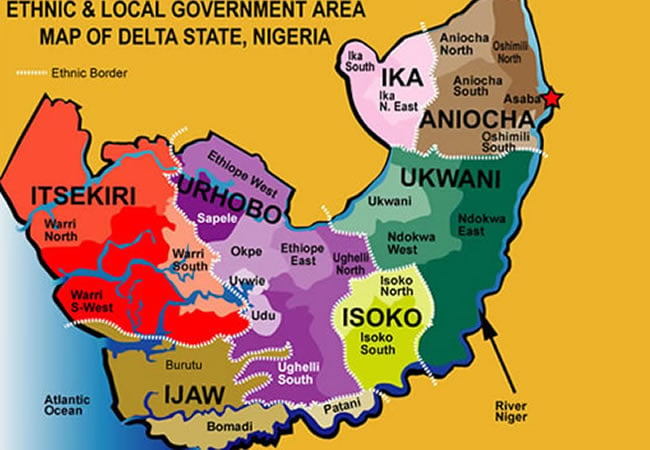
There is something deeply unsettling about hearing the word tribalism in Nigeria in 2026. Not because our ethnic identities do not matter. They do. Our languages, traditions, kingdoms, ancestral homes and histories are part of what makes Nigeria what it is. But there is a difference between being proud of where you come from and believing that another person’s identity makes them less deserving of justice, opportunity or belonging. That distinction has become increasingly important in Delta State, particularly around Warri.
For decades, the Warri axis has carried the burden of ethnic tension involving the Urhobo, Itsekiri and Ijaw. The history is complicated. The grievances are real. The memories are painful. But perhaps the most important question today is no longer simply: Who was right? It is: How do we ensure that the children of Delta State do not inherit the conflicts of their parents and grandparents?

Why This Matters to Me
I am not approaching this conversation as a detached observer. I am an Urhobo woman from Okpe Local Government Area of Delta State. My mother is from Oha town, while my father is from Adagbrassa-Ugolo. Yet I was born and raised in Jos, Plateau State, where I spent 18 years growing up among the Berom people. Later, I came to Lagos in search of a better life. My experiences across these different parts of Nigeria shaped my understanding of what it means to live with people who are not exactly like you.
I grew up among people whose language and ethnic identity were different from mine. I have lived and worked in Lagos among people from virtually every part of Nigeria. And my own family reflects the Nigeria I believe is possible: the father of my children is Yoruba, from Idotun in Ibeju-Lekki, Lagos. So when I hear discussions about tribalism, I often find myself asking: Must our differences always become divisions?And when I think about my children, another question comes. What do I tell them about Nigeria? Do I tell them that they must choose between the identities they inherited? Do I teach them to fear people because of their ethnicity? Or do I teach them that they can be proud of where they come from while respecting where somebody else comes from? I choose the latter. And that is why the conversation about Delta State matters to me.
Warri Is More Than a Conflict
To understand Warri, one must first understand that it is not simply a city caught between ethnic groups. It is a complex social, cultural and economic space. Human Rights Watch described Warri as a homeland claimed by the Itsekiri, Urhobo and Ijaw, with the Urhobo largely associated with the landward areas north of the city, the Itsekiri with communities extending along the Benin and Escravos river systems, and Western Ijaw communities occupying parts of the riverine areas to the south and east. But real life is more complicated than those geographical descriptions. People move. Families intermarry. Businesses cross community boundaries. Markets bring people together. Schools bring children together. Religious institutions bring families together. Urbanisation has blurred some of the old boundaries. And Warri itself has become a diverse urban centre where different identities coexist. That reality must be remembered whenever the history of the crisis is discussed.
The Towns and Communities Behind the Headlines
When we say “Warri crisis”, it is easy to forget that we are talking about actual towns and communities inhabited by actual people. We are talking about places with ancestral histories, traditional rulers, markets, schools, churches, mosques, farms, fishing settlements, businesses and families. Communities associated with the wider Urhobo presence around the Warri axis include places such as Okere, Ugborikoko, Effurun, Agbarho, Osubi and other Urhobo settlements. The Itsekiri historical and cultural landscape includes communities such as Ogidigben, Ugborodo, Omadino and Ode-Itsekiri, popularly known as Big Warri, among others. The Ijaw presence is deeply connected to the riverine and coastal areas, including Ogbe-Ijoh, Gbaramatu and other communities across the creeks and waterways.
These names are not merely locations. They represent people. They represent ancestral claims. They represent traditional institutions. They represent livelihoods. They represent memories. And for many residents, they represent home. That is why arguments about boundaries, local government headquarters, wards and political representation can become emotionally charged. A government map may show a boundary. A community may see an ancestral homeland. A politician may see a constituency. A young person may see access to jobs and political opportunity. An oil-producing community may see a question of survival. The same piece of land can therefore mean very different things to different people.
How Politics Turned Geography Into a Battleground
The modern crisis did not emerge from nowhere. Tensions around political administration in the Warri area predated Nigeria’s independence, while colonial administrative arrangements helped shape competition over political authority and access to resources. The discovery and exploitation of oil intensified those tensions. Oil transformed land from merely ancestral territory into an economic and political asset. Local government boundaries mattered. Political wards mattered. Representation mattered. Access to jobs mattered. Development projects mattered.
And increasingly, the question of who had political influence over an area could determine who was positioned to benefit from the enormous economic value surrounding it.
The creation of Warri South-West Local Government Area in 1997 and the controversy surrounding the location of its headquarters became a major trigger. The headquarters was placed at Ogidigben, an Itsekiri community, rather than Ogbe-Ijoh, an Ijaw community. Violence followed. Human Rights Watch documented the 1997 conflict and the long-standing tensions surrounding the administrative arrangements. The crisis did not end there. Violence returned in 1999 and escalated again in 2003. In the 2003 violence, disputes over electoral wards and boundaries became immediate triggers for fighting between Itsekiri and Urhobo groups, while Ijaw militias were also involved in violence in the wider conflict. The important lesson is this: What appeared to be a dispute about boundaries was actually sitting on top of decades of deeper grievances.
And Then There Was Oil
This is where the story becomes even more complicated. The Warri area is part of the Niger Delta, one of the world’s major oil-producing regions. But oil wealth has not automatically translated into prosperity for everyone who lives around it. For many communities, oil has brought jobs and business opportunities. For others, it has been associated with environmental degradation, loss of traditional livelihoods, inadequate infrastructure and perceptions of exclusion. When fishing becomes difficult because of environmental degradation, when farming is affected, when young people cannot find jobs and when communities believe development is being distributed unfairly, frustration grows. And when political power is perceived as the route to accessing resources, ethnicity can become the language through which communities compete. That is why solving ethnic tension without addressing development inequality is unlikely to produce lasting peace. You cannot tell people to stop fighting over resources without creating a system they believe distributes those resources fairly.
The Human Cost Was Bigger Than the Headlines
The Warri crisis was not simply a political disagreement. People were killed.
Thousands were displaced. Businesses were destroyed. Communities were disrupted. Oil production was affected. Families were separated. Human Rights Watch reported that thousands were displaced during the 2003 violence alone, while the broader conflict produced extensive displacement and destruction. But statistics can sometimes hide the human tragedy. Behind every displaced person was a mother wondering where her children would sleep. Behind every destroyed house was a family that had built a life there. Behind every dead youth was a parent who lost a child. Behind every abandoned community was a story that may never have been properly recorded. And behind every child who witnessed violence was a memory that could shape how that child sees another ethnic group for the rest of their life. That is why peace cannot simply mean that guns have stopped firing.
The Urhobo Question Cannot Be Ignored
There is also an uncomfortable conversation that must happen.The concerns of the Urhobo people about political representation and marginalisation in Delta State should not be dismissed. The Urhobo are one of the state’s major ethnic groups, and questions about representation, development, political access and fairness deserve serious public discussion. But there is a difference between demanding justice and demanding ethnic dominance. If Urhobo people feel marginalised, the answer should be stronger institutions, fair representation and transparent development; not the marginalisation of another community. The same principle applies to the Itsekiri. The same principle applies to the Ijaw. The same principle applies to every other community in Delta State. Justice cannot be selective.
Delta State Is Bigger Than the Warri Triangle
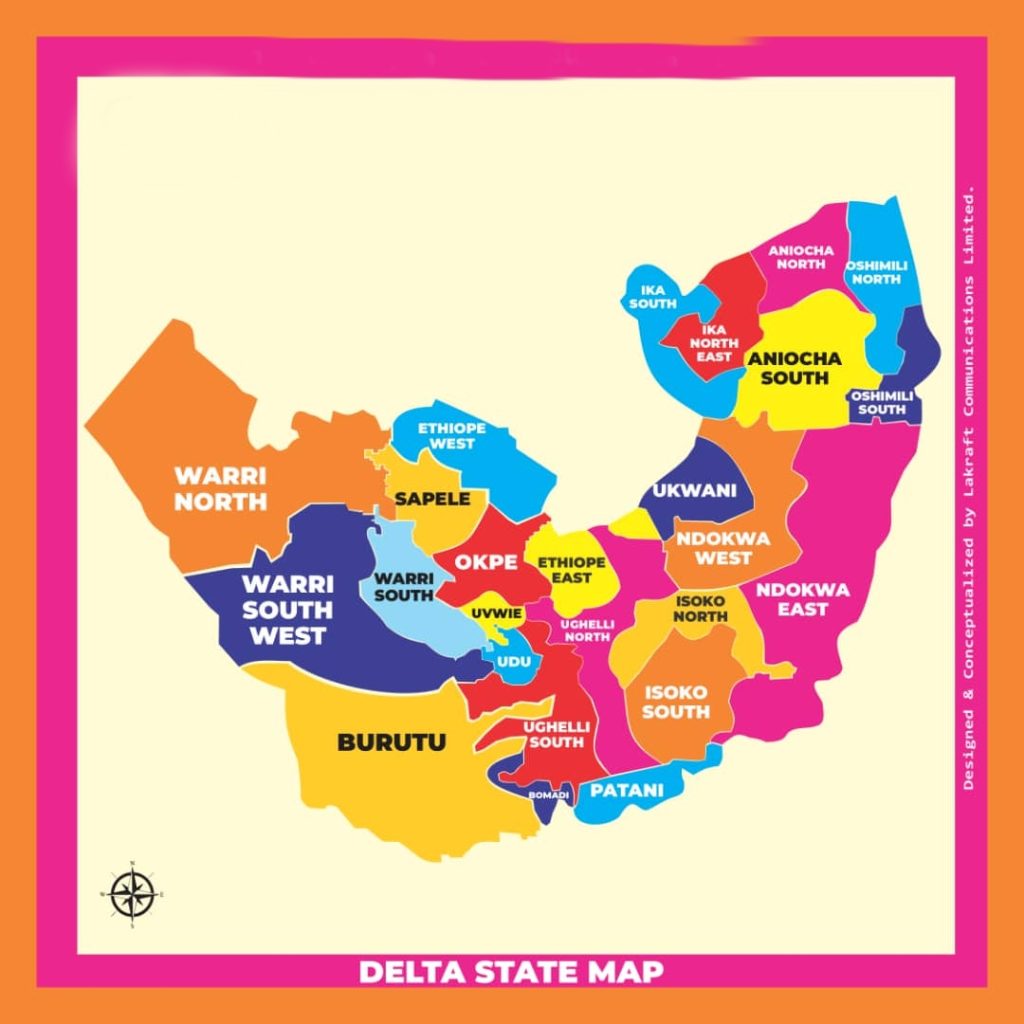
It is also important not to reduce Delta State to only the Urhobo, Itsekiri and Ijaw question. Delta is extraordinarily diverse. The state is home to Urhobo, Isoko, Itsekiri, Ijaw, Anioma-related communities, Ukwuani, Ika, Enuani, Okpe, Uvwie, Olukumi and other communities. That diversity should be regarded as an asset. Delta State is almost a miniature Nigeria. Different languages. Different histories. Different cultures. Different traditional institutions. Different geographical realities. Yet one state. The challenge is turning that diversity into cooperation rather than competition.
The People Are More Interconnected Than Politics Suggests
Walk through a market. Visit a school. Attend a wedding. Go to a hospital. Enter a bus. Visit a church. Look at the workforce of a company. You will find Nigerians whose ethnic identities are different from those of the people around them. This is also true in Delta State. The trader does not necessarily ask the customer where they come from before selling to them. The doctor treats the patient. The teacher teaches the child. The mechanic repairs the vehicle. The business owner employs workers. The student sits beside another student. Ordinary life is often much more integrated than political rhetoric. That is an important truth. Because peace already exists in many everyday interactions. What we need is to strengthen it.
My Nigeria Is Possible
I think about my childhood in Jos. I was an Urhobo girl growing up among the Berom. I did not grow up believing that every person from another ethnic group was a potential enemy. I grew up knowing that people could be different from me and still be my neighbour. I later came to Lagos. I built a career. I met people from different parts of Nigeria. And I built a family that crosses ethnic boundaries. Today, I have children whose heritage includes both Urhobo and Yoruba. I cannot tell them that one identity is superior to another. I cannot tell them to distrust people because of their tribe. And I certainly cannot explain to them that Nigeria is too diverse for peaceful coexistence. Because their own lives already prove otherwise. Nigeria is already interwoven. Our politics simply needs to catch up.
So What Can Delta State Do Differently?
I will not ask that “government should do something.” But what exactly should be done?
1. Create a Permanent Delta Peace and Social Cohesion Council
Delta State should establish a credible, non-partisan platform bringing together representatives of the major ethnic communities. It should include: Traditional rulers; Youth leaders; Women leaders; Religious leaders; Community development associations; Civil society; Academics and historians; Security representatives; Government officials. Its mandate should be practical:
detect tensions early, mediate disputes and prevent local disagreements from becoming ethnic crises.
2. Build an Early-Warning System
A disagreement over a boundary, political ward, community project or land should not be allowed to become a crisis before authorities respond. Delta needs a community-based early-warning mechanism. Community leaders should be able to report emerging tensions. Government should respond before rumours become mobilisation.
3. Make Development Spending Transparent
One way to reduce ethnic competition is to make government spending easier to understand.
Citizens should know: What projects are approved; Where they are located; How much they cost; Who is executing them; When they should be completed; Whether they were actually delivered. When people can see the distribution of development, rumours have less room to thrive.
4. Create a Fair Development Formula
Development should not be determined solely by political influence. Delta State should develop transparent criteria that consider: Population; Infrastructure gaps; Poverty; Environmental impact; Economic contribution; Community needs; Geographic vulnerability. That way, a community can understand why it received a particular intervention. Fairness must be visible.
5. Put Youths at the Centre
Young people are often the first victims and sometimes the first recruits when communities become violent. But young people can also become the strongest peacebuilders. Delta should create cross-community youth programmes involving Urhobo, Itsekiri, Ijaw, Isoko, Anioma and other young people. Let them build businesses together. Let them participate in environmental projects. Let them compete in sports. Let them learn technology together. Let them document their communities. Let them travel to one another’s towns. Because it is much harder to demonise people you know personally.
6. Let the Towns Tell Their Own Stories
This is one area where journalists, historians and community organisations can make a difference. Instead of only reporting communities when violence occurs, media organisations should document their histories, food, culture, traditional institutions, businesses, festivals, schools and ordinary people. Tell the story of Okere. Tell the story of Ugborikoko. Tell the story of Effurun and Uvwie. Tell the story of Ogidigben. Tell the story of Ugborodo. Tell the story of Ogbe-Ijoh. Tell the stories of the riverine communities. Tell the stories of the markets. Tell the stories of the women. Tell the stories of the young entrepreneurs. Tell the stories of people who have lived peacefully across ethnic boundaries. If the only time a community appears in the news is during a crisis, the public will eventually associate that community with crisis. Journalism can help change that narrative.
7. Women Must Have a Seat at the Peace Table
Women should not only be invited after conflict has happened. They should be involved before conflict. Women understand the everyday consequences of violence. They know what happens to families when men are killed or displaced. They know what happens to children when schools close. They know what happens to household businesses when communities become unsafe.
Women should therefore be represented in peacebuilding, mediation, reconstruction and development planning.
8. Teach the History Without Teaching Hatred
Children should know what happened in Warri. But teaching history should not mean teaching children whom to hate. Schools and community programmes should present the history carefully, using multiple perspectives. Children should learn that communities can have competing claims.
They should learn that political decisions can have unintended consequences. They should learn that violence destroys everyone. And most importantly: They should learn that their generation has the responsibility to do better.
9. Establish a Delta Reconciliation and Memory Project
There should be an effort to document the experiences of people affected by the Warri crisis. Survivors should be able to tell their stories. Women should tell their stories. Formerly displaced families should tell their stories. Community leaders should tell their stories. Historians should provide context. Journalists should preserve the records. The purpose should not be to reopen wounds. It should be to ensure that the truth is not lost; and that the next generation understands the cost of conflict.
10. Make Economic Opportunity a Peace Policy
Peacebuilding cannot survive on speeches. Young people need jobs. Women need access to capital. Small businesses need support. Fishermen need a healthy environment. Farmers need productive land. Communities affected by oil production need meaningful development. Entrepreneurs need infrastructure. Students need quality education. If people have something meaningful to lose, they become less willing to gamble their future on violence. Economic development is therefore not separate from peacebuilding. It is part of peacebuilding.
What About the Oil Communities?
This conversation must also include the communities living closest to oil installations.
Oil companies, government institutions and host communities need stronger mechanisms for dialogue, environmental accountability and community development. Communities should not have to wait until frustration becomes protest before they are heard. There must be continuous engagement. And where environmental damage affects traditional livelihoods such as fishing and farming, remediation and alternative economic opportunities must be taken seriously. The people living around the resources should not merely see wealth leaving their communities. They should see sustainable development coming back.
The Role of Political Leaders
Political leaders have an enormous responsibility. They must stop using ethnicity as an easy mobilisation tool. During elections, it may be tempting to tell people: “Your tribe is under threat.” It may win votes. But it can destroy social relationships long after the election is over. A responsible politician should be able to say: “I will defend the interests of my people without teaching them to hate your people.” That is leadership.
The Role of Traditional Rulers
Traditional institutions also have a critical role. The traditional rulers of different communities must become bridges rather than competing symbols of ethnic authority. Regular inter-community meetings should become normal. Where disputes arise, traditional institutions should have mechanisms for dialogue before politicians or armed groups take over the conversation.
The Role of the Media
The media cannot afford to be careless with ethnic stories. A headline can inflame. A photograph can provoke. An unverified claim can travel across WhatsApp in minutes. Journalists must therefore distinguish between reporting a community’s grievance and endorsing its narrative. We should ask: What evidence supports this claim? What does the other community say? Who benefits from this narrative? Could this report increase tension? What solution is being proposed? Ethnic conflict reporting requires courage, fairness and restraint.
The Question We Must Ask in 2026
We have spent decades asking: Who owns Warri? Perhaps it is time to ask a different question: What kind of Warri do we want to leave for our children? A Warri where communities continue competing over identity? Or a Warri where identity is respected but development is shared? A Delta State where political power determines who belongs? Or one where institutions protect everyone? A region where young people inherit stories of conflict? Or one where they inherit stories of cooperation? The choice is ours.
We Do Not Have to Forget to Forgive
There is sometimes a fear that reconciliation means forgetting history. It does not. We should remember. We should document. We should acknowledge the people who suffered. We should hold perpetrators accountable where evidence supports it. We should learn from political failures. But remembering should not become a permanent invitation to revenge. We can remember without repeating. We can acknowledge grievances without weaponising them. We can defend our communities without dehumanising another. We can be Urhobo without being anti-Itsekiri. We can be Itsekiri without being anti-Urhobo. We can be Ijaw without being anti-Urhobo or anti-Itsekiri. And we can be proud Nigerians without pretending our ethnic identities do not exist.
The Delta We Should Leave Behind
I think again about my children. Their father is Yoruba. Their mother is Urhobo. They are growing up in Lagos, but their story is bigger than Lagos. They carry several Nigerian identities. And I want them to inherit all of them with pride. I want them to know where their mother comes from. I want them to know where their father comes from. But I also want them to understand that they do not have to choose one identity against another. That is the Nigeria I believe in. And perhaps that is the Delta State we should be building. A Delta where the child in Okere can dream as freely as the child in Ogidigben. Where the child in Ogbe-Ijoh can grow up knowing the child in an Urhobo community is a neighbour, not an enemy. Where the young person in Ugborodo can find opportunity without having to fight for it. Where communities can defend their legitimate interests without turning to violence. Where political representation is fair.
Where development is transparent. Where oil wealth produces opportunity rather than resentment. Where women participate in peacebuilding. Where young people build businesses together. Where traditional rulers become bridges. Where journalists tell the truth without becoming weapons. And where children inherit history without inheriting hatred.
The Real Victory
The real victory in Delta State should not belong to Urhobo. It should not belong to Itsekiri. It should not belong to Ijaw. It should not belong to any political party. The real victory should belong to the people. Because no ethnic group can build a prosperous Delta State alone. No community can develop in isolation. No political leader can create lasting peace by himself. And no child should have to carry the burden of a conflict they did not create. The question is therefore no longer simply who was right in Warri? The question is: What are we going to do differently now? That is where the real conversation should begin. Our differences should explain our history; not determine our future.
Theresa Moses is a Lagos Based Journalist and can be reached via email: [email protected]
GATMASH NEWS
…News That Drives Impact
For advert placements and business inquiries, kindly reach us via:
📧 Email: [email protected]
📞 Tel/WhatsApp: +234 (0) 807 202 2024
We value your voice! Share your stories, eyewitness reports, and contributions with us anytime:
📲 SMS/WhatsApp: +234 (0) 807 202 2024
📧 Email: [email protected]
Visit us online: https://gatmash.com