
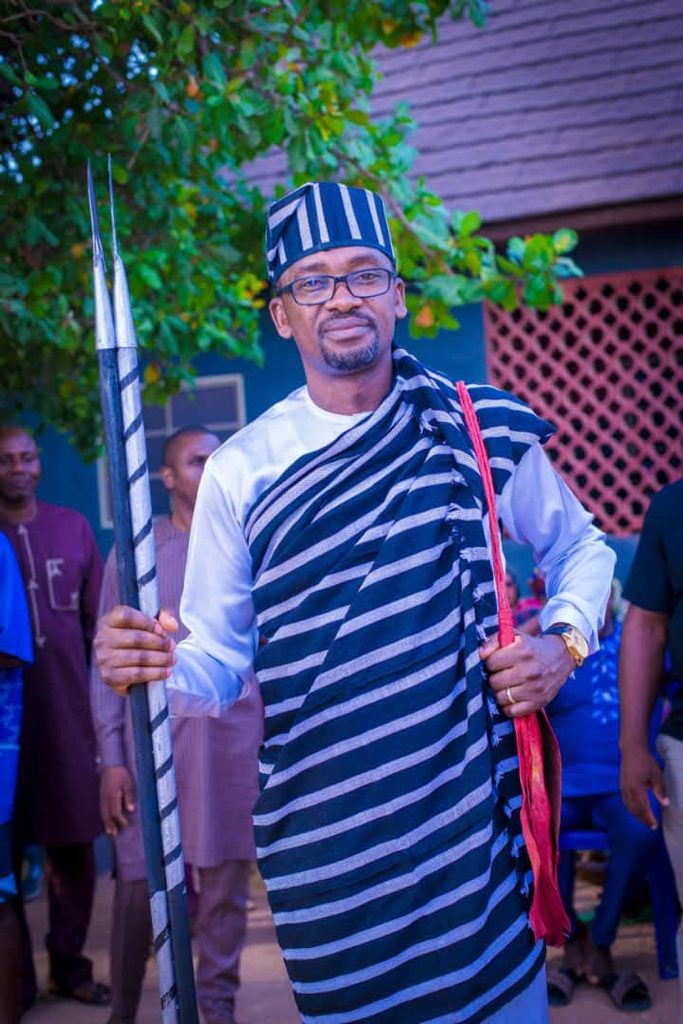
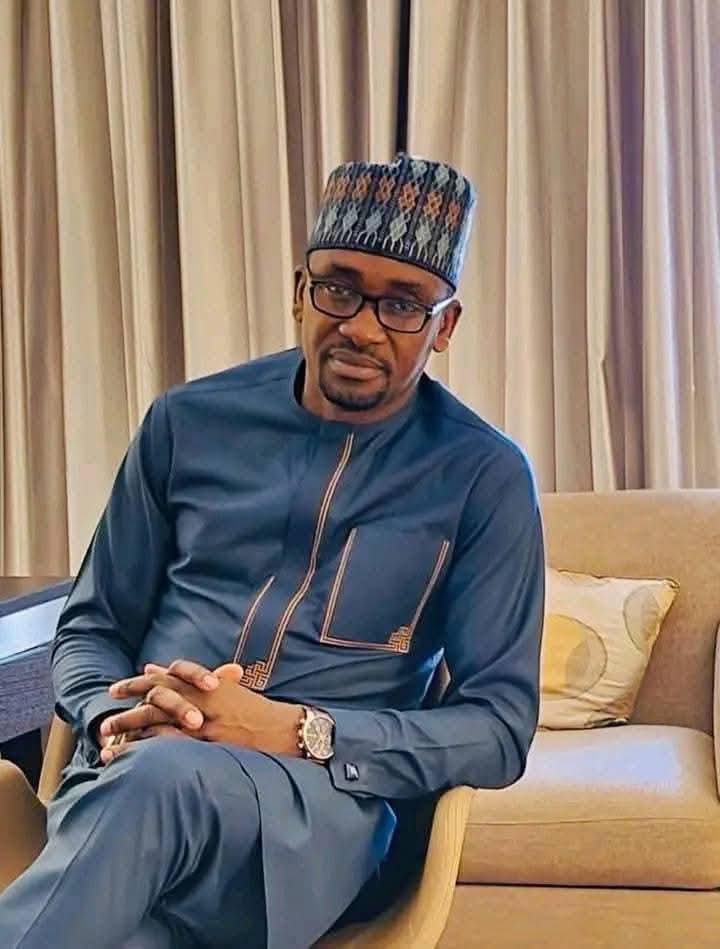
Dr. Jeffrey Kuraun, an All Progressives Congress (APC) governorship aspirant in Benue State, has called for a more proactive and community-driven approach to tackling insecurity in the state, saying the government must focus on preventing attacks rather than responding only after lives have been lost.
In an interview with Theresa Moses and Oluwatosin Simon Faleye, Kuraun speaks about his political ambition, the APC governorship primary, infrastructure, agriculture, solid minerals, security, youth development and his vision for Benue State.
A geologist and oil and gas professional with more than two decades of experience, Kuraun says his security strategy would focus on identifying flashpoints, strengthening border surveillance, improving intelligence gathering and involving communities in protecting their areas.
“Nobody will protect us. We will have to protect and defend ourselves,” Kuraun said, stressing that insecurity requires a collective response involving government, security agencies, traditional institutions and communities.

You have described insecurity as one of the biggest challenges facing Benue. What would you do differently?
The situation is alarming. We cannot continue to operate mainly on a reactive basis.
Today, people are attacked and killed. Afterwards, government officials visit the affected communities, condolences are expressed and statements are made.
My concern is: what are we doing to prevent the attacks from happening in the first place?
We need to identify the flashpoints and vulnerable areas. We need to know the borders and routes through which people can enter the state to cause destruction.
Security must become more community-driven. The government cannot do it alone, and the people cannot do it alone. It has to be a collaborative effort.
You made a particularly strong statement that “nobody will protect us.” What exactly do you mean?
I mean that we must take responsibility for our own security.
Nobody will protect us. We will have to protect and defend ourselves.
That does not mean replacing the conventional security agencies. It means communities must be organised to provide information, identify suspicious movements and work with security agencies before situations escalate. We need an early-warning system.
You have proposed a Benue Security and Border Patrol Agency. How would it work?
The proposal is part of a broader security strategy. Benue has vulnerable areas and borders that require greater attention. We should have structures capable of monitoring those areas and providing timely information to the appropriate authorities.

The objective is prevention. We should not wait until people are killed before we begin asking questions about what happened.
There must be better coordination between communities, traditional rulers, local authorities and security agencies.
Are you suggesting that the state should take over the responsibility of the federal security agencies?
No. The constitutional responsibilities of the federal security agencies remain important. What I am advocating is a complementary structure that strengthens intelligence, community engagement, border monitoring and early response.
Security is too important for us to approach it as the responsibility of one institution.
Beyond security, what is your vision for Benue’s economy?
Benue has enormous potential. We are known as the Food Basket of the Nation, but we need to ask ourselves whether we are getting the full economic value from that identity.
Agriculture should not stop at production. We need to develop the entire value chain; production, processing, storage, transportation, packaging, financing and access to markets.
When farmers produce and processors are located close to them, when there is proper storage and reliable access to markets, the economic impact becomes much greater. That will create jobs and increase the income of our people.
You have also spoken about solid minerals. Why is that important to Benue?
Benue is blessed with mineral resources, but resources underground do not automatically translate into development.
We need responsible exploration and development, local participation and investment in the sector.There must also be a framework that ensures host communities benefit from legitimate mineral development.
With the right policies, solid minerals can become another source of revenue, employment and economic opportunity for Benue.
You are coming into politics from a professional background in geology, oil and gas and mining. What do you think that experience brings to governance?
My professional background has exposed me to project management, natural resources, technical analysis, business development and working across different environments.
I have seen how resources can be transformed into economic opportunities when there is planning, investment and proper management. I believe that experience can be useful in governance. Government is ultimately about solving problems and delivering results.
You have also criticised the infrastructure claims of the present administration. What is your concern?
My concern is that projects should speak for the government. If a government describes itself as an infrastructure-focused administration, then people should be able to see the infrastructure.
I have questioned the claim that major infrastructure achievements have been made without corresponding projects that people can readily identify. My challenge is simple: show the people the completed projects.
If there are roads that have been completed, let them be commissioned and let the people see them.
Let us come to the APC governorship primary. You have disputed the outcome. What exactly happened?
My position is that the process did not reflect what should happen in a credible primary election.
Before the election, I was the only aspirant, to my knowledge, who submitted a duly acknowledged list of local government and ward agents to the appropriate committee.
Our agents were deployed across the state. But there were locations where, according to the information we received and the evidence available to us, materials were not provided and the primary did not take place as it should have.
Where the exercise was conducted, I believe I won in several places, and we have photographs and videos to support our position. That is why I challenged the process.
You said you have evidence. What does that evidence show?
It includes photographs and videos from different locations. For example, I referred to Mbavaa Council Ward in Konshisha Local Government Area. Our people were there. They identified themselves as agents and supporters, showed the location and provided visual evidence of what happened. Yet results were circulated which, in my view, did not correspond with what happened on the ground.
My position is that anyone claiming victory should be able to show the evidence of the actual electoral process.
What do you want the APC leadership to do?
I want the party to look at the evidence and ensure that the process is properly concluded. I have made my position known to the party leadership.
The important thing is that the process must be credible and capable of standing up to scrutiny.
If the party eventually chooses another candidate, what will be your position?
I am an APC member and I will remain in the party. I will respect the party’s final decision. I also remain committed to supporting President Bola Ahmed Tinubu and the party.
But respecting a final decision does not mean I should abandon my position on what happened during the primary. If I genuinely believe that I won an election and that the process did not reflect the actual outcome, I have a responsibility to speak about it and present the evidence.
What is your message to Benue voters?
My message is that Benue has the resources and human capital to do much better. We have agriculture. We have solid minerals. We have young people. We have women who are contributing significantly to the economy.
What we need is leadership that can connect these resources to opportunities. Young people should not only be mobilised during elections. They should be given opportunities to build businesses, acquire skills and participate meaningfully in the economy.
What about women and the girl child?
Women must be part of the development process. We cannot talk about development while leaving women and girls behind.
We need policies that support education, economic empowerment and participation.
When you invest in a girl, you are investing in the future of the family and the community.
Finally, what kind of Benue do you want to build?
I want a Benue where our resources create opportunities for our people. A Benue where agriculture is not just about producing food but about building industries and creating wealth.
A Benue where our mineral resources are developed responsibly. A Benue where young people can find opportunities at home.
A Benue where women and girls have access to education and economic opportunities. And a Benue where people can live and sleep without fear.
For me, leadership is not about titles. It is about solving problems. If we can prevent insecurity instead of merely reacting to it, create jobs instead of waiting for unemployment to worsen, and turn our resources into opportunities, then we will be moving Benue in the right direction.
GATMASH NEWS
…News That Drives Impact
For advert placements and business inquiries, kindly reach us via:
📧 Email: [email protected]
📞 Tel/WhatsApp: +234 (0) 807 202 2024
We value your voice! Share your stories, eyewitness reports, and contributions with us anytime:
📲 SMS/WhatsApp: +234 (0) 807 202 2024
📧 Email: [email protected]
Visit us online: https://gatmash.com