

By Theresa Moses
Nigeria’s persistent out-of-school crisis, affecting an estimated 18.3 million children, has renewed calls for stronger government action, increased investment in basic education and coordinated interventions to protect the country’s most vulnerable young population.
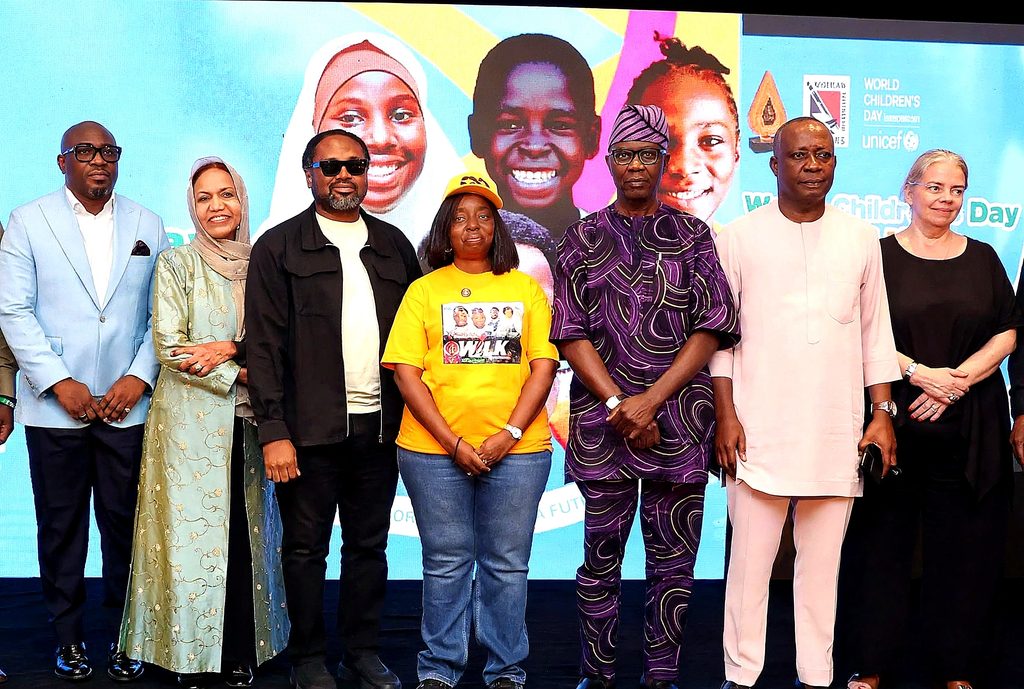
The United Nations Children’s Fund (UNICEF), the Nigerian Guild of Editors (NGE) and the Diamond Awards for Media Excellence (DAME) made the call at the 2026 World Children’s Day High-Level Media Symposium on Thursday, 26th November, 2026 in Lagos, where stakeholders examined the connections between children’s education, healthcare, nutrition and protection.
The scale of the education challenge featured prominently in discussions, with NGE President, Eze Anaba, questioning the effectiveness of existing interventions and urging government at all levels to demonstrate greater commitment to getting children into school.

He challenged political leaders, community organisations, the media and the private sector to move beyond public declarations and support practical measures capable of delivering measurable improvements.
Anaba also raised concerns about the safety and suitability of some school environments, particularly public schools located close to motor parks, bus stops and train stations. He called for greater attention to the conditions in which children learn and grow.
Beyond access to education, UNICEF Representative in Nigeria, Wafaa Saeed, drew attention to the importance of early childhood development, particularly the first 1,000 days of life, describing the period as fundamental to a child’s long-term health and cognitive development.
She noted that approximately 80 per cent of human brain growth occurs between conception and a child’s second birthday, making adequate nutrition, healthcare and early stimulation critical during this period.
Saeed urged journalists to give greater visibility to the circumstances of vulnerable children and families, stressing that reporting should go beyond statistics to examine the realities behind the figures and the effectiveness of interventions.
The symposium also highlighted the relationship between childhood nutrition, immunisation and survival, with concerns raised over the number of children still missing essential healthcare services.
Permanent Secretary of the Lagos State Primary Health Care Board, Dr Ibrahim Akinwunmi-Mustafa, said Nigeria had recorded progress in reducing under-five mortality, which declined from 132 to 110 deaths per 1,000 live births between 2018 and the period under review.
However, he identified newborn mortality, childhood malnutrition and immunisation gaps as continuing public health concerns.
According to him, four in every 10 Nigerian children are stunted, while the prevalence of stunting in Lagos is approximately 17 per cent.
He also estimated that between 120,000 and 130,000 children in Lagos had never received any vaccination, highlighting the need to strengthen routine immunisation and reach underserved communities.
Mustafa called for increased investment in primary healthcare, improved antenatal services, nutrition support and immunisation programmes. He also urged the media to counter health misinformation and sustain public awareness of preventive healthcare.
On the policy front, Lagos State First Lady, Dr Claudiana Ibijoke Sanwo-Olu, reaffirmed the importance of protecting children through inclusive policies and stronger support for mothers and families.
She highlighted the proposed review of the Lagos State Child’s Rights Law 2015 as an opportunity to strengthen legal protections and address emerging challenges affecting children’s welfare.
The private sector’s contribution to child development also featured at the event. Airtel Nigeria’s Director of Corporate Communications and Corporate Social Responsibility, Adefemi Adeniran, maintained that children’s economic circumstances, family backgrounds and developmental differences should not limit their opportunities.
DAME Trustee, Lanre Idowu, meanwhile, underscored the importance of professional journalism in advancing children’s rights, noting that the partnership between UNICEF, NGE and DAME supports capacity building, access to credible information and recognition of impactful reporting.
UNICEF Nigeria Goodwill Ambassador and musician, Cobhams Asuquo, highlighted the use of music and creative communication to improve public understanding of child survival and development, particularly through the First 1,000 Days of Life campaign.
Children also participated in the symposium, raising concerns about barriers to education, healthcare and protection, including poverty, gender inequality and disability.
The event, which coincided with UNICEF’s 80th anniversary, reinforced calls for sustained investment and stronger collaboration among government institutions, development partners, the private sector, communities and the media.
With millions of children still excluded from education and significant gaps remaining in healthcare and nutrition, stakeholders stressed the need to translate commitments into practical interventions that improve children’s lives.
GATMASH NEWS
…News That Drives Impact
For advert placements and business inquiries, kindly reach us via:
📧 Email: [email protected]
📞 Tel/WhatsApp: +234 (0) 807 202 2024
We value your voice! Share your stories, eyewitness reports, and contributions with us anytime:
📲 SMS/WhatsApp: +234 (0) 807 202 2024
📧 Email: [email protected]
Visit us online: https://gatmash.com