

By Theresa Moses
For a teacher trying to understand how artificial intelligence will change the classroom, a journalist watching audiences move from traditional news platforms to social media, or a creator wondering how to protect original work in an age when content can be reproduced within seconds, the digital future is no longer something to prepare for. It is already here.
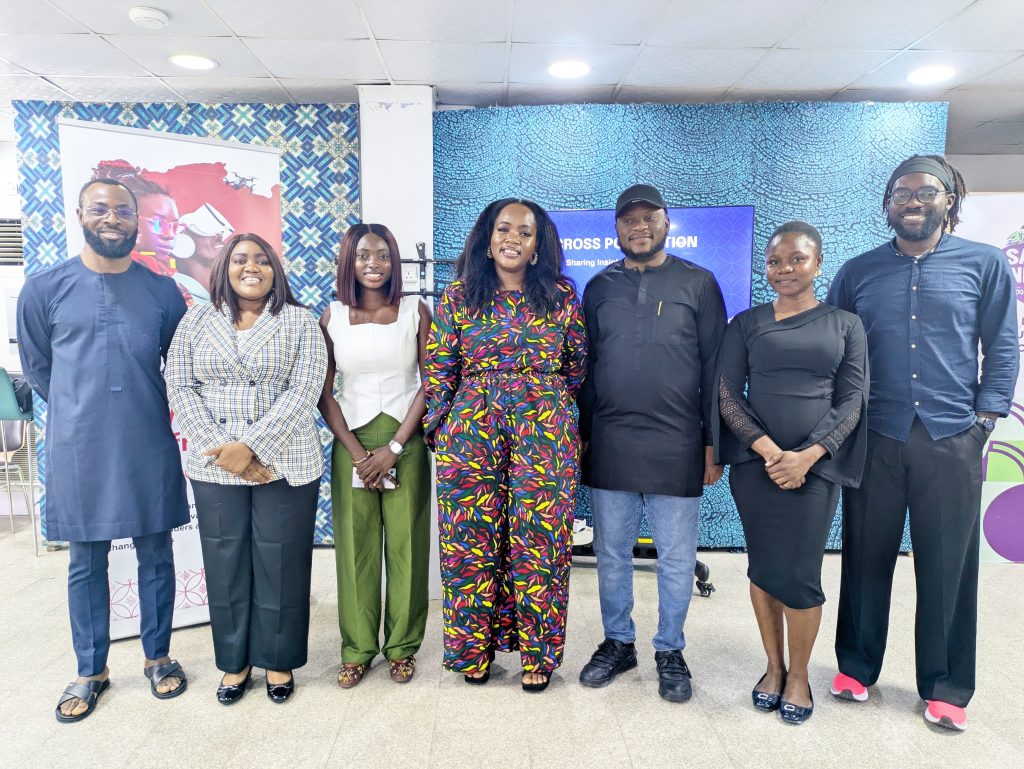
And for professionals across different sectors, the question is increasingly no longer whether technology will disrupt the way they work, but whether they will be prepared enough to adapt without losing sight of responsibility, ethics and human judgement. That reality came into sharp focus at Confluence: A Cross-Sector Dialogue on Digital Resilience, Privacy, Intellectual Property and Child Online Protection, organised by the Technology and Society Practice of Co-Creation Hub (CcHUB) in Lagos recently.
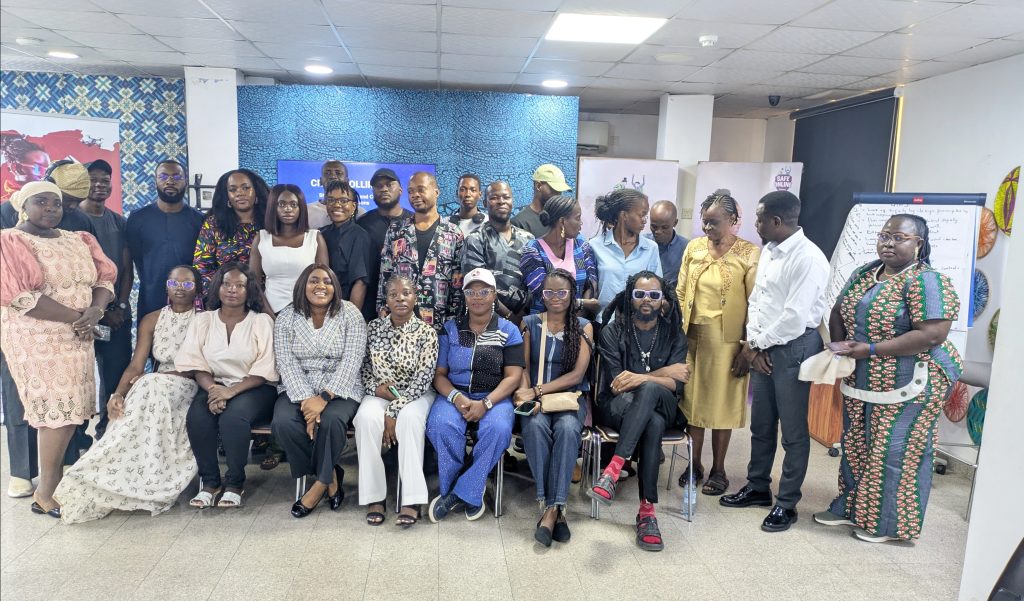
The event brought together educators, creative, journalists, bloggers, technology professionals, entrepreneurs and members of the Tech & Society community to examine challenges that are no longer confined to the technology sector.

From artificial intelligence and changing workplaces to misinformation, privacy, intellectual property and the safety of children online, the conversation revealed how deeply interconnected Nigeria’s digital challenges have become. But beyond the conversations about technology was a more fundamental question: Can Nigeria build a digital future that is innovative without becoming unsafe and connected without compromising trust and responsibility? For participants, the answer lies not in technology alone, but in how people, organisations and institutions respond to it.
The Workplace Is Changing
One of the strongest messages from the panel discussion was that artificial intelligence is already changing professional life, whether workers are ready for it or not.
For Omolara Esther Hamzat, an online safety advocate, cyber security professional and digital trust educator, the challenge is not to run away from AI but to understand how to use it responsibly. AI adoption, she noted, must take into account concerns around bias, data and cyber security.
But there is another question that businesses and policymakers must confront: what happens to workers when automation changes or eliminates some roles? Technology can improve productivity, but without deliberate reskilling, the benefits of innovation could come at a cost for workers who are unable to transition into new roles. That makes continuous learning increasingly important. For professionals, acquiring a qualification and settling into a career may no longer be enough. The ability to learn, unlearn and acquire new skills could become one of the most important forms of job security.
Media Cannot Afford to Stand Still
The disruption is particularly visible in the media industry. Chimgozirim Nwokoma, Senior Reporter and Acting Managing Editor at Condia, pointed to the dramatic change in how audiences discover and consume information. The audience that once depended largely on newspapers, television, radio and search engines is increasingly consuming news through platforms such as TikTok, Instagram and X. For news organisations, that shift is more than a change in distribution. It is a challenge to relevance.
Nwokoma argued that media organisations must adapt to changing audience behaviour or risk losing the very audiences they exist to serve. The newsroom itself is also changing, with AI already being used for some routine tasks. But adaptation does not mean surrendering journalism to machines. It means understanding which tasks technology can assist with while preserving the human responsibilities of verification, context, editorial judgement and accountability. For journalists, therefore, the future may belong not to those who reject AI or blindly embrace it, but to those who understand its capabilities and limitations.
For Creative, AI Opens Doors and Raises Questions
For Africa’s growing creative economy, artificial intelligence presents both an opportunity and a challenge. For the creative industry, Ifeoma “Oma” Areh, a Pan-African creative strategist, filmmaker and media innovator, urged African creatives to embrace emerging technologies rather than wait until others have mastered them. Her argument was particularly significant for a continent with a young and increasingly digital creative population. AI can potentially reduce production barriers, accelerate creative processes and enable individuals with limited resources to produce content for global audiences.
But the technology also raises difficult questions about originality and ownership. If a creator’s work is copied, altered or used to train or generate another piece of content, where does ownership begin and end? What happens to attribution? How can emerging creators understand and protect their rights? These questions make intellectual property knowledge increasingly important, particularly as more Nigerians build careers and businesses around digital content.
Education Must Adapt Too
The classroom is another area where technological change is already being felt. Boye Oshinaga, technology entrepreneur and co-founder of Gradely, brought the discussion into education, challenging teachers and education stakeholders to think differently about AI. The question, he suggested, should not simply be whether AI will replace teachers. It should be whether teachers who refuse to understand and use technology will remain competitive in an education system increasingly shaped by digital tools.
Used responsibly, AI can support teachers, personalise learning, provide additional resources and help address some educational gaps.
But technology cannot replace the human elements of teaching; empathy, mentorship, classroom relationships and understanding the individual needs of learners. The challenge is therefore to equip teachers with the skills to use technology as a complement to their expertise.
Privacy Is No Longer a Technical Issue
Beyond AI, Confluence examined an issue that affects almost every digital user: privacy. Names, photographs, phone numbers, financial details, locations, conversations and online activities increasingly exist as digital data. Yet many people use digital platforms every day without fully understanding how their information is collected, stored or shared. For individuals and businesses, poor data practices can result in financial loss, reputational damage, fraud or loss of trust.
The Privacy in Practice focused on how organisations can improve their handling of personal information and adopt practices that strengthen trust. The message was simple: privacy should not be treated as an afterthought. It must be incorporated into the way organisations design products, communicate with customers and manage information.
When Children Go Online
Perhaps the most sensitive conversation at Confluence was around child online protection. Today’s children are growing up in a digital environment that many of their parents never experienced. They use smartphones, social media, online games, digital learning platforms and other technologies for education, entertainment and social interaction.
These platforms can expand their access to knowledge and opportunity, but they can also expose them to harmful content, cyber bullying, manipulation, exploitation and other risks.
The Child Online Protection examined the concept of shared responsibility. Parents have a role, Schools have a role, Technology companies have a role, Government, civil society organisations and communities also have roles.
Participants explored practical questions around duty of care, safety-by-design, digital integrity and accountability, recognising that protecting children online requires more than simply telling them what not to do. It requires safer systems around them.
Four Tables, One Shared Challenge
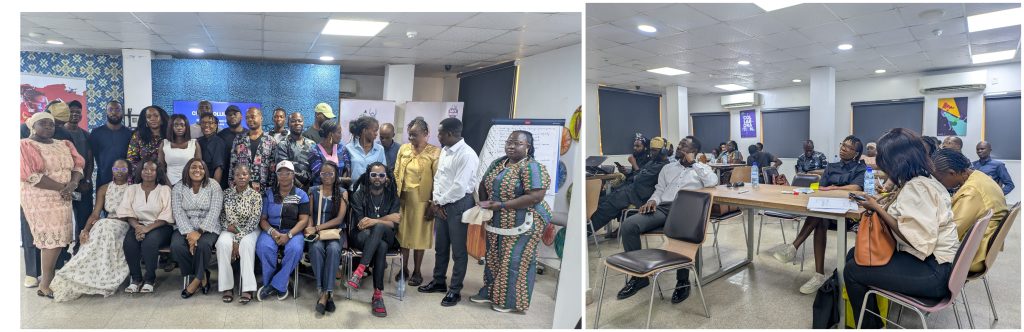
One of the most valuable aspects of Confluence came after the panel discussion. Participants were divided into four facilitated table dialogues focusing on Digital Resilience, Privacy in Practice, Intellectual Property in the Digital Age, and Child Online Protection. The objective was not merely to repeat what had already been said on stage, but to bring different professional experiences into the same conversation.
At the Digital Resilience table, participants examined how individuals and organisations can prepare for, respond to and recover from digital risks, while identifying opportunities for collaboration across sectors.
The Privacy in Practice group considers how organisations handle personal information, the challenges they encounter and the practical measures that can strengthen trust.
The Intellectual Property group explored how AI and digital technologies are changing content ownership, attribution and responsible use, while considering ways to protect original work without discouraging innovation.
At the Child Online Protection table, participants examined the responsibilities of different sectors in creating safer digital environments for children, including safety-by-design, accountability and duty of care.
Each group presented its observations and recommendations, reinforcing the need for cross-sector collaboration, as digital challenges may differ across professions, but their solutions are interconnected and no single sector can build a safe and resilient digital environment alone.
The exercise transformed Confluence from a panel discussion into a genuine exchange of experiences. It also demonstrated that some of the most practical solutions may come from people who do not ordinarily sit at the same table. For instance, a teacher may understand a challenge a technology developer has never encountered. A journalist may recognise a misinformation pattern that concerns a cyber-security professional. A creator may understand the consequences of content theft in ways policymakers need to hear. A parent may identify a child-safety concern that should influence how a platform is designed.
As moderator, I closed the conversation with a message that captured the urgency of the moment: “Embrace technology. Go with the times. Keep developing yourself. AI is not taking your job. Failure to adapt is taking your job.” But adaptation must go hand in hand with responsibility, ethical judgment and a commitment to using technology to create meaningful value.
Theresa Moses, a journalist, media executive, entrepreneur and social impact advocate, can be reached via email: [email protected]
GATMASH NEWS
…News That Drives Impact
For advert placements and business inquiries, kindly reach us via:
📧 Email: [email protected]
📞 Tel/WhatsApp: +234 (0) 807 202 2024
We value your voice! Share your stories, eyewitness reports, and contributions with us anytime:
📲 SMS/WhatsApp: +234 (0) 807 202 2024
📧 Email: [email protected]
Visit us online: https://gatmash.com