
By Theresa Moses
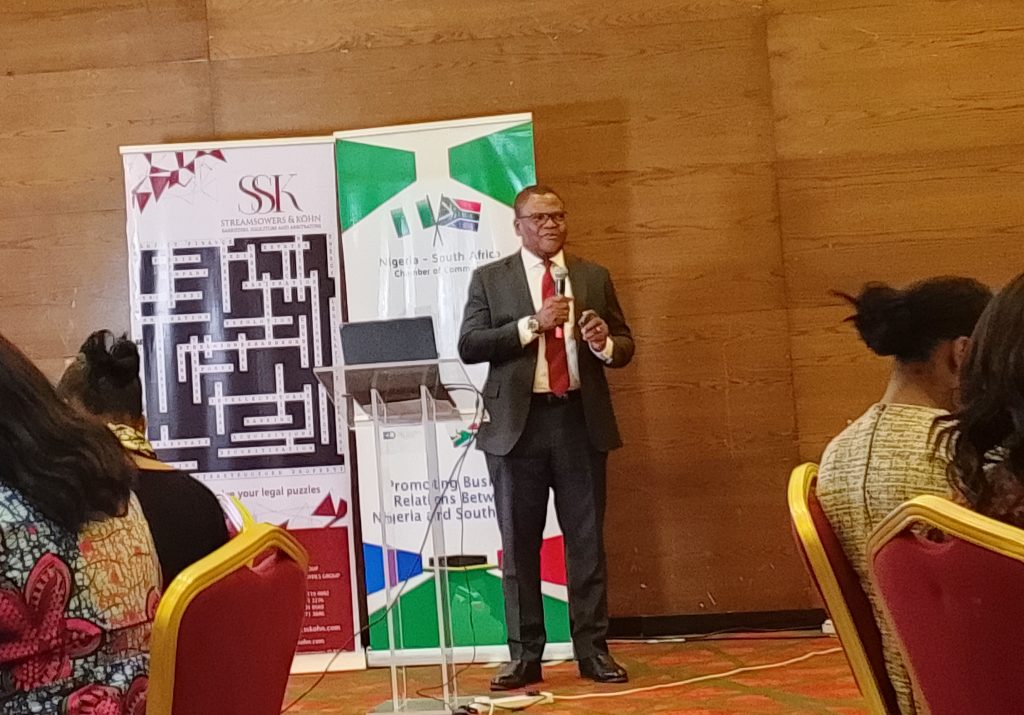
The Nigeria-South Africa Chamber of Commerce (NSACC) has underscored the critical importance of succession planning and generational wealth preservation as a cornerstone for sustainable business growth across Nigeria and the African continent.
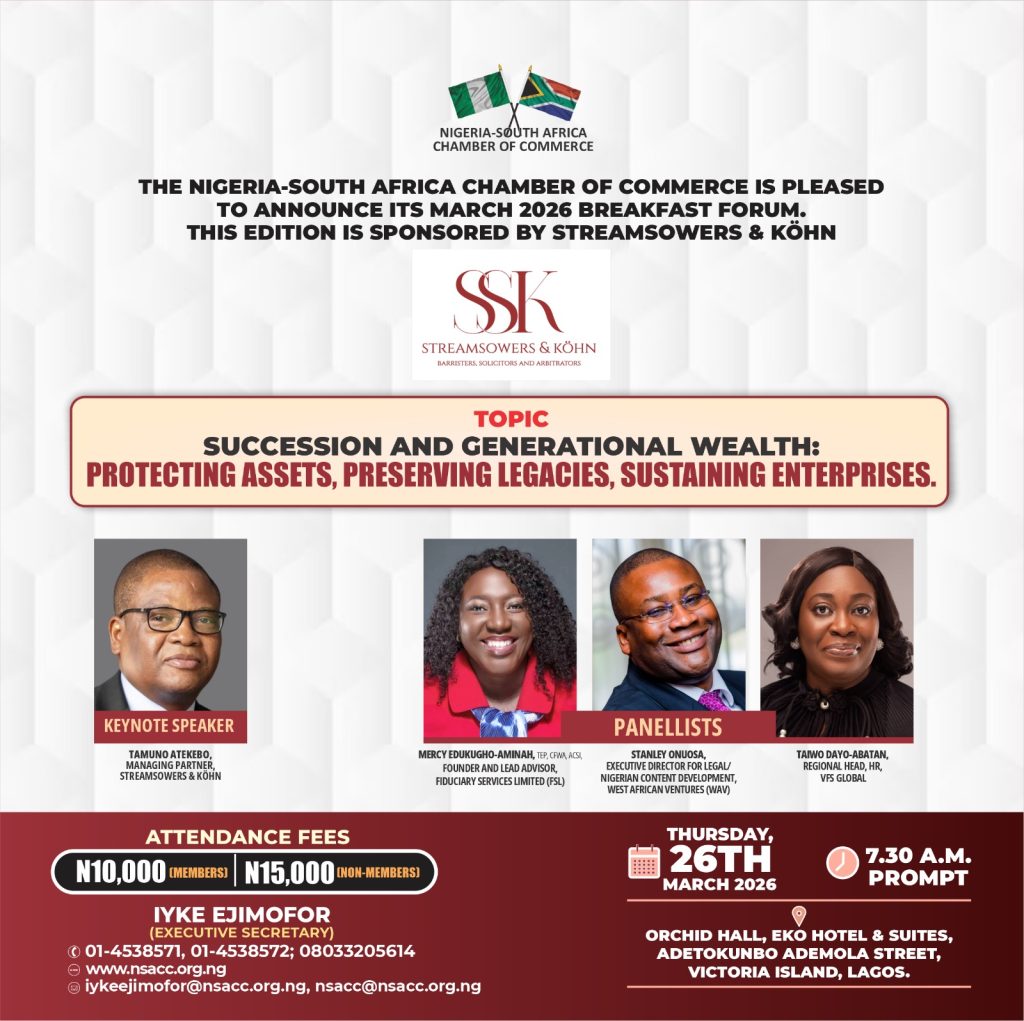
This formed the focus of its March 2026 Breakfast Forum held on Thursday, March 26, 2026, at Eko Hotel and Suites, with the topic: “Succession and Generational Wealth: Protecting Assets, Preserving Legacies, Sustaining Enterprises.”
The high-level forum brought together business leaders, policymakers, legal practitioners, and corporate stakeholders to interrogate the growing need for structured succession frameworks in an evolving economic landscape where many businesses struggle to outlive their founders.

In her opening remarks, the Chairperson of NSACC, Dr. Ije Jidenma, emphasized that businesses must move beyond short-term success and deliberately embed long-term sustainability strategies into their operations.
She observed that a significant number of African businesses fail within one generation due to weak succession structures, poor governance, and lack of institutional continuity.
“Succession planning must be a strategic priority, not a reactive response,” she said, noting that true generational wealth extends beyond financial accumulation to include the preservation of values, vision, and institutional frameworks.
Dr. Jidenma outlined three critical pillars necessary for sustaining enterprises across generations: deliberate and early planning, capacity and competence development for future leaders, and the establishment of strong legal and financial architecture.
Delivering the keynote address, Tamuno Atekebo, Managing Partner at Streamsowers & Köhn, stressed that succession planning is not merely about transferring wealth but about ensuring continuity, stability, and the protection of legacy.
Drawing from practical experiences, he warned that the absence of proper planning tools often results in disputes, financial hardship, and, in many cases, the collapse of thriving businesses after the death of founders.
“It is not enough to build wealth; without proper structure, everything can fall apart. Succession planning should start early and must be intentional,” Atekebo stated.
He highlighted that many individuals neglect essential estate planning tools such as wills, trusts, and structured governance frameworks, thereby exposing their families and businesses to avoidable risks.
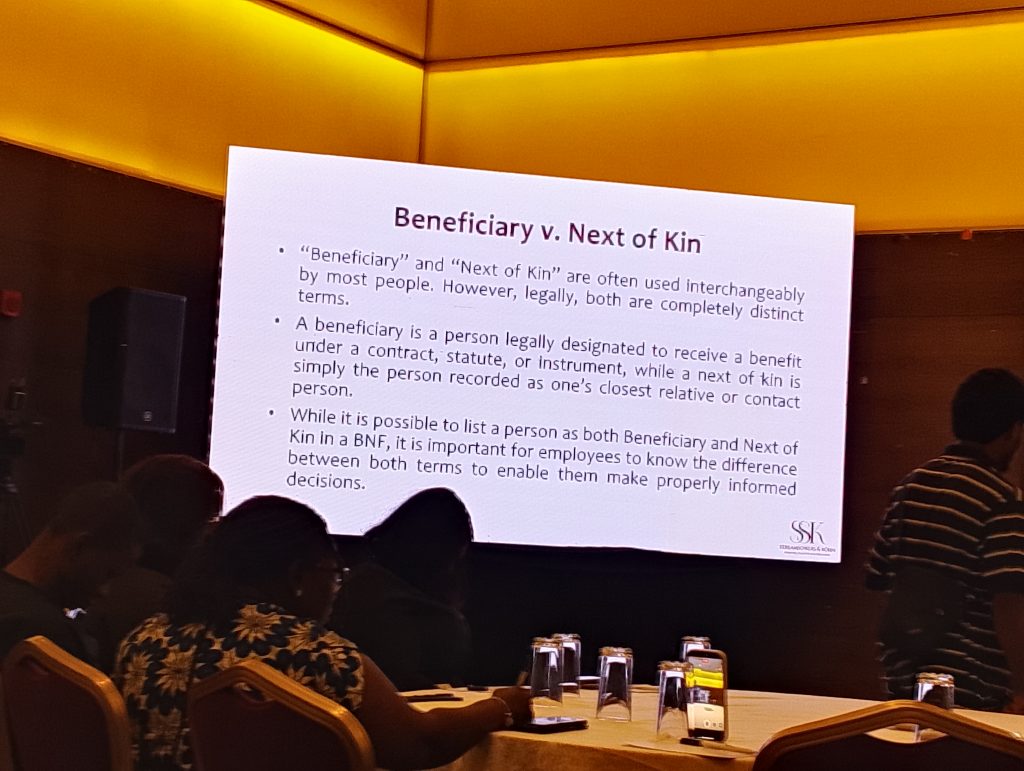
Atekebo also clarified a widely misunderstood concept, noting that naming a “next of kin” does not confer legal rights to inheritance, urging individuals and corporate leaders to seek professional advice when structuring their estates.
He further emphasized the importance of aligning personal estate planning with corporate governance systems, stressing that organizations must clearly define leadership succession, ownership transfer mechanisms, and operational continuity frameworks.
According to him, strong corporate governance not only ensures business longevity but also enhances investor confidence and improves overall business valuation.
He cautioned against the misuse of estate planning as a tool for settling personal disputes, warning that unresolved conflicts often lead to prolonged litigation, thereby denying rightful beneficiaries access to inherited wealth and weakening the overall estate.
The forum also featured an engaging panel session with industry experts who provided deeper insights into the legal, human resources, and governance dimensions of succession planning.
Among the panelists, Mercy Edukugho-Aminah, founder and lead advisor, Fiduciary Services Limited emphasized that succession planning must be tailored to the nature of assets and the long-term objectives of individuals.
She explained that while wills offer flexibility and are relatively easier to implement, trusts provide greater control and are more suitable for long-term wealth preservation, particularly for high-net-worth individuals seeking to maintain influence over how their assets are managed and distributed across generations.
She identified a common challenge among Nigerians the tendency to acquire assets in personal names without considering future transfer implications, warning that this often leads to significant legal and financial complexities during estate administration.
“Waiting until the perfect time is one of the biggest mistakes people make. Succession planning should begin as soon as you start acquiring assets,” she advised.
From a human resources perspective, Dr. Omotola Dayo Adedapo, Head of Human Resources at Sterling Financial Holdings Company Plc, addressed the persistent confusion between “next of kin” and “beneficiaries,” describing it as a major source of posthumous disputes within organizations.
She clarified that a next of kin primarily serves as an emergency contact, while beneficiaries are legally designated recipients of entitlements such as insurance, pensions, and other employment-related benefits.
Dr. Adedapo called on organizations to streamline their documentation processes, reduce duplication, adopt digital systems, and enforce regular updates of employee records to reflect changes in personal circumstances.
She further advised HR professionals to handle post-death claims with a balance of empathy, fairness, objectivity, and strict adherence to legal frameworks, warning against becoming entangled in family disputes.
Also contributing, Stanley Onuosa, Executive Director (Legal) at West African Ventures (WAV), reiterated that succession planning should begin as soon as an individual or business acquires assets of value.
“If you don’t make arrangements, the law will make one for you, and it may not align with your wishes,” he cautioned.
Onuosa stressed that effective succession planning enables not just wealth transfer but also wealth preservation and multiplication, particularly when supported by strong corporate governance structures, clear ownership frameworks, and professional advisory support.
He noted that separating ownership from management and institutionalizing business processes are critical steps toward ensuring that enterprises outlive their founders.
The event, sponsored by Streamsowers & Köhn, served as a vital platform for cross-border dialogue and knowledge sharing, reinforcing the need for a cultural shift toward proactive estate planning and structured wealth management.
It concluded with a strong call to action for individuals and organizations alike to prioritize succession planning as a critical tool for protecting assets, preserving legacies, and sustaining enterprises across generations.
GATMASH NEWS
…News That Drives Impact
For advert placements and business inquiries, kindly reach us via:
📧 Email: [email protected]
📞 Tel/WhatsApp: +234 (0) 807 202 2024
We value your voice! Share your stories, eyewitness reports, and contributions with us anytime:
📲 SMS/WhatsApp: +234 (0) 807 202 2024
📧 Email: [email protected]
Visit us online: https://gatmash.com/