
By: Theresa Moses
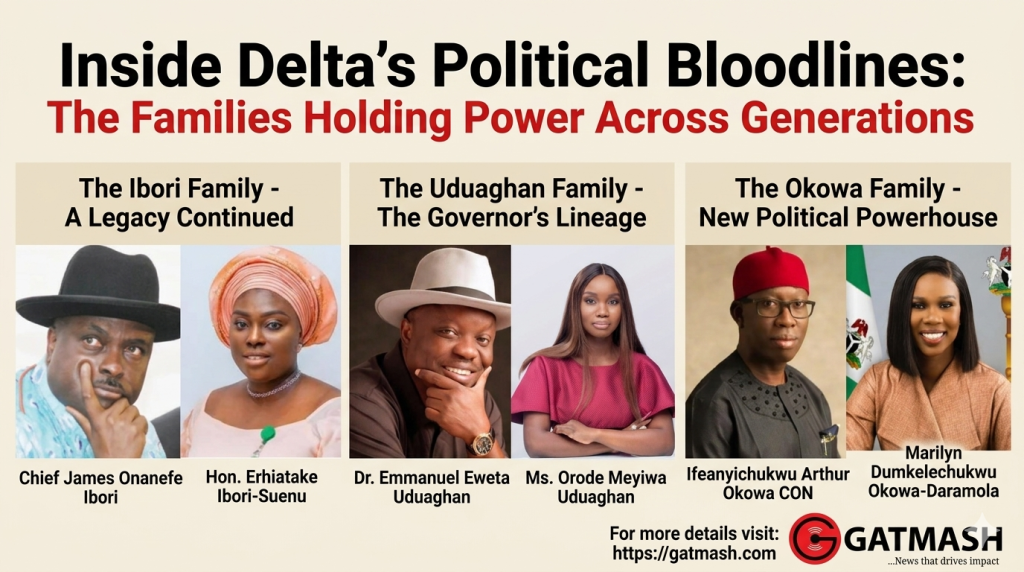
From Ibori to Uduaghan and Okowa, Delta State’s political landscape continues to reflect a deepening pattern of family-linked influence, where children of former governors now occupy or pursue strategic political offices; raising renewed questions about democracy, inclusion, and access to power.
The political structure of Delta State has, over the years, evolved into a tightly woven network of influence where legacy, loyalty, and family name appear to play a significant role in determining who gains access to power.
At the heart of this structure are three influential political families linked to former governors James Ibori, Emmanuel Uduaghan, and Ifeanyi Okowa; whose daughters have emerged as active participants in both state and national politics.

While supporters describe their rise as a continuation of leadership experience and political mentorship, critics argue it reflects a deepening system of political inheritance that limits wider participation.
THE IBORI POLITICAL STRUCTURE
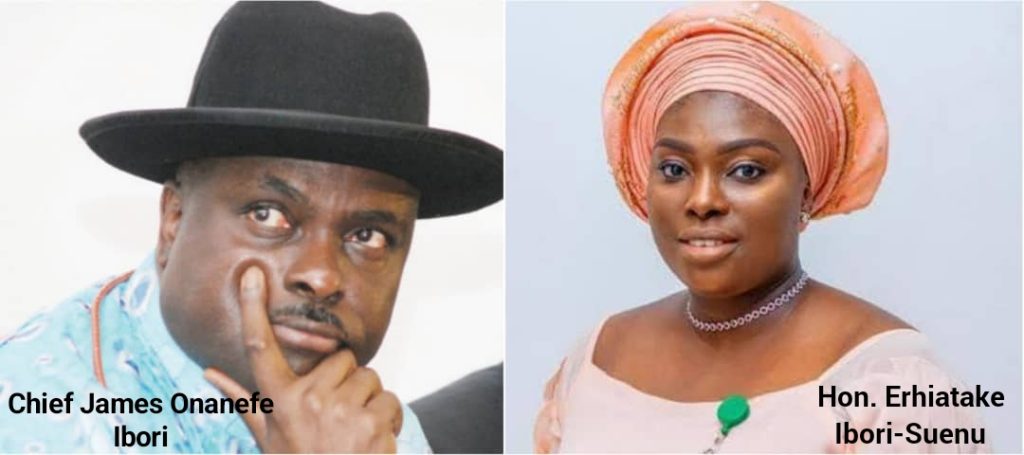
One of the most prominent figures in this unfolding narrative is Erhiatake Ibori-Suenu, daughter of former Governor James Ibori.
She currently serves as a member of the House of Representatives, representing Ethiope Federal Constituency. Her political journey has been closely watched, particularly due to her strong foothold in both grassroots mobilization and legislative influence.
Initially elected under the Peoples Democratic Party (PDP), she later defected to the All Progressives Congress (APC), citing internal political challenges and what she described as threats to her political aspirations.
Her emergence is widely viewed as a continuation of the Ibori political influence, which has remained a strong force in Delta politics for decades. Analysts note that despite leaving office years ago, the Ibori political structure continues to shape party decisions, delegate alignments, and electoral outcomes in key constituencies.
THE UDUAGHAN FAMILY AND STRATEGIC POSITIONING

Another key figure in the discussion is Orode Meyiwa Uduaghan, daughter of former Governor Emmanuel Uduaghan.
Her political career reflects a blend of appointed and elective roles. She previously served as Commissioner for Humanitarian Affairs, Community Support Services, and Girl-Child Development in Delta State under Governor Sheriff Oborevwori.
She also held a position as Senior Special Assistant on Small and Medium Enterprise (SME) Development during her father’s administration, strengthening her exposure within government structures.
More recently, she emerged as a consensus candidate of the APC for the Warri North Constituency seat in the Delta State House of Assembly; further reinforcing her family’s continued relevance in the state’s political ecosystem.
THE OKOWA POLITICAL LINEAGE
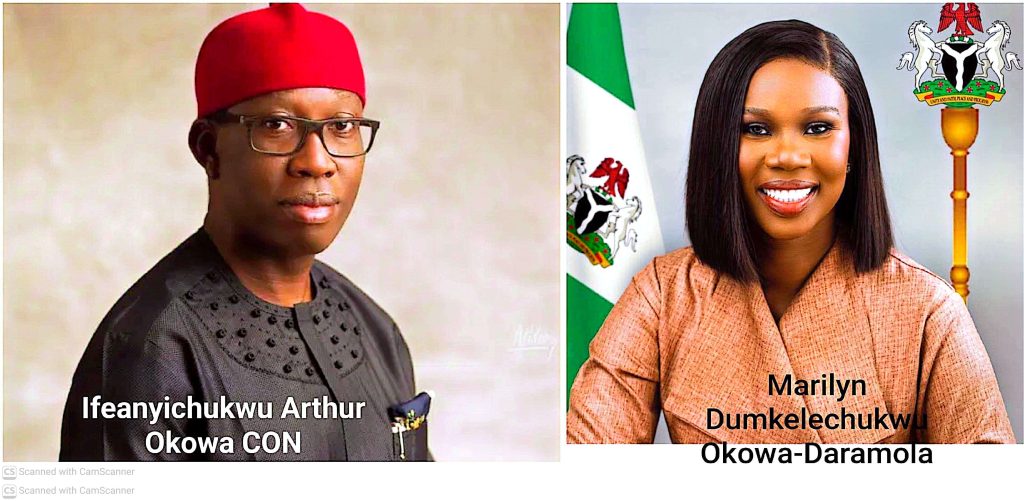
Marilyn Dumkelechukwu Okowa-Daramola, daughter of former Governor Ifeanyi Okowa, also remains a key political figure in the state legislature.
A lawyer by profession and a known philanthropist, she represents the Ika North-East Constituency in the Delta State House of Assembly. She is currently seeking re-election for a second term, positioning herself as part of the emerging generation of political actors within the state.
Her continued presence in elective office reflects what many analysts describe as the institutionalization of political family networks within Delta’s governance structure.
POWER BEYOND OFFICE: THE IDEA OF POLITICAL “KINGMAKERS”
Although these former governors are no longer in office, their influence continues to be widely referenced in political discussions across the state.
Reports and political commentary have long suggested that these figures remain central to party negotiations, candidate selection processes, and electoral mobilization within their respective regions.
A widely cited perspective on Delta politics describes these former governors as part of an enduring political establishment whose influence extends beyond formal office, shaping leadership emergence across party lines and electoral cycles.
A SYSTEM OF POLITICAL INHERITANCE?
The repeated emergence of political actors from the same families has triggered growing concern among citizens and civil society observers, particularly regarding access to political opportunity.
Critics argue that the system risks turning democracy into a form of political inheritance, where family connections provide a significant advantage over merit or grassroots political engagement.
Some analysts also point to a widening gap between established political elites and ordinary youths, many of whom struggle to gain visibility within party structures dominated by influential networks.
YOUTH DISENGAGEMENT AND RISING FRUSTRATION
Beyond the family networks, a deeper concern emerging from public discourse is the level of youth participation in political restructuring.
Observers note that while young people remain active on social media and civic discussions, their representation in actual decision-making structures remains limited compared to established political families.
This has led to growing calls for greater youth mobilization, internal party reform, and broader political inclusiveness in Delta State.
THE FUTURE OF DELTA’S POLITICAL LANDSCAPE
As Delta State continues to evolve politically, the tension between legacy influence and democratic inclusion is expected to remain central to future elections.
While supporters of political families argue that experience and continuity matter in governance, critics insist that democracy must also create space for new entrants without inherited political advantage.
Ultimately, the future of Delta politics may depend on whether the system continues along its current path of entrenched political families; or opens up to wider participation from emerging leaders across the state.
Theresa Moses is a journalist and writes from Lagos
GATMASH NEWS
…News That Drives Impact
For advert placements and business inquiries, kindly reach us via:
📧 Email: [email protected]
📞 Tel/WhatsApp: +234 (0) 807 202 2024
We value your voice! Share your stories, eyewitness reports, and contributions with us anytime:
📲 SMS/WhatsApp: +234 (0) 807 202 2024
📧 Email: [email protected]
Visit us online: https://gatmash.com