

By Faleye Oluwatosin Simon
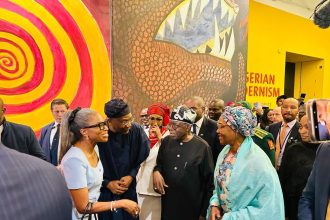
Public concern is mounting over the perceived silence of Nigeria’s First Lady, Oluremi Tinubu, following the abduction of schoolchildren in Oyo State, an incident that has reignited national anxiety over insecurity and the safety of students.
The kidnapping, which reportedly involved dozens of pupils and teachers in Oriire Local Government Area, has drawn widespread condemnation from citizens and stakeholders across the country. While President Bola Ahmed Tinubu swiftly denounced the attack and assured Nigerians of ongoing rescue efforts, attention has now shifted to the absence of a public statement from the First Lady.
For many Nigerians, the office of the First Lady carries symbolic weight particularly in moments involving vulnerable groups such as children. The expectation is not rooted in constitutional duty but in moral leadership, empathy, and advocacy.

Observers note that although the First Lady holds no executive powers, her voice often serves as a source of comfort and national solidarity during crises. Critics argue that silence, especially in emotionally charged situations like child abduction, can be interpreted as detachment.
However, political analysts caution against rushing to conclusions. They point out that security-related incidents such as kidnappings often involve delicate negotiations and strategic restraint in public communication. In such cases, limiting commentary may be a calculated decision to avoid jeopardizing rescue operations.
Oyo State Governor Seyi Makinde had earlier urged the public to avoid sensationalising the incident, stressing that the safety of the victims remains the government’s top priority.
The situation has also sparked comparisons with former First Lady, Patience Jonathan, who was widely known for her outspoken and sometimes emotional public interventions during national crises.
While her approach often attracted criticism, it also reinforced her visibility as a vocal advocate in moments of distress. In contrast, Mrs. Tinubu has maintained a more reserved and structured communication style, focusing largely on policy-driven engagements and humanitarian programmes.
Supporters of the First Lady argue that absence from the media does not necessarily equate to inaction. They suggest that interventions may be happening behind the scenes, away from public glare.
Nonetheless, the incident underscores a broader issue: the growing expectation for public figures, especially those in symbolic leadership roles, to provide reassurance during national emergencies.
As the nation awaits positive developments in the rescue efforts, the conversation has expanded beyond security to include leadership visibility and emotional connection with citizens.
For many Nigerians, the question is no longer just about who speaks but when, how, and what that silence means in times of collective fear.
GATMASH NEWS
…News That Drives Impact
For advert placements and business inquiries, kindly reach us via:
📧 Email: [email protected]
📞 Tel/WhatsApp: +234 (0) 807 202 2024
We value your voice! Share your stories, eyewitness reports, and contributions with us anytime:
📲 SMS/WhatsApp: +234 (0) 807 202 2024
📧 Email: [email protected]
Visit us online: https://gatmash.com